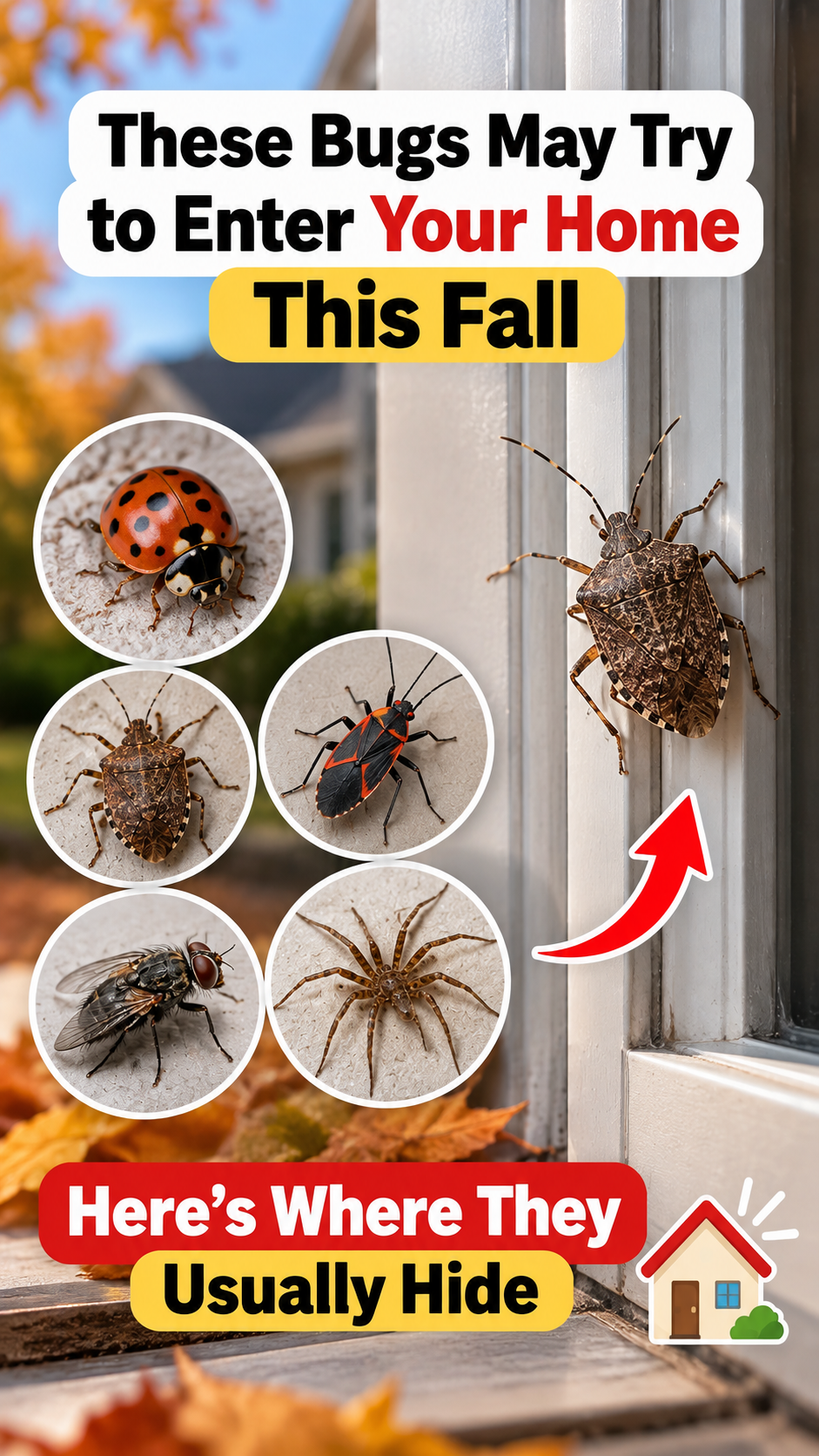
When temperatures begin to drop, you may notice something strange happening around your home.
A bug appears near a window.
Then another one is crawling across the wall.
A few days later, you find several insects gathered around a sunny window—even though you rarely noticed them during summer. 🪲🏠
It isn’t necessarily a coincidence.
As fall arrives, several types of insects and other arthropods seek protected places where they can survive colder conditions. Unfortunately, small gaps around a house can provide exactly the shelter they’re looking for.
And once they’re inside, they can hide in places you might never think to check.
Here are some of the most common fall visitors—and what you can do before they settle in.
Why Do Bugs Come Inside During Fall?
Your house offers something extremely valuable when outdoor conditions become unfavorable:
Shelter.
Some species spend the colder months in protected locations. Cracks in siding, spaces around windows, attics, wall voids and other sheltered areas can provide places to overwinter.
This doesn’t necessarily mean your home is dirty.
In many cases, the insects are simply responding to seasonal changes.
That’s why you can have a perfectly clean house and still suddenly notice bugs appearing in September, October or November.
1. Stink Bugs
One of the best-known fall home invaders in parts of the United States is the brown marmorated stink bug.
These shield-shaped insects may gather on the sunny sides of buildings before finding small openings that lead indoors.
Once inside, they can spend winter hidden in protected spaces.
Then comes the surprising part:
You may not notice them again until a warm winter day—or even spring—when they suddenly become active.
Penn State Extension explains that brown marmorated stink bugs commonly enter structures in fall to overwinter and may gather around windows, doors and other entry points. Penn State Extension – Brown Marmorated Stink Bug
Where They May Hide
Check around:
- Window and door frames
- Attics
- Wall voids
- Siding
- Utility openings
- Upper floors
- Curtains and window areas
And here’s one important tip:
Don’t crush them indoors.
As their name suggests, stink bugs can release an unpleasant odor when disturbed or crushed.
A vacuum or container is generally a cleaner way to remove individual insects.
2. Asian Lady Beetles 🐞
Ladybugs usually have a positive reputation.
But large numbers of multicolored Asian lady beetles entering a home can become annoying.
During fall, these beetles may gather on buildings—particularly on sunny exterior surfaces—before entering cracks and openings.
Once inside, they may overwinter in protected areas.
On warmer days, some can become active and appear around windows and light sources.
Iowa State University Extension describes Asian lady beetles as accidental indoor invaders that commonly enter buildings in autumn. Iowa State University Extension – Multicolored Asian Lady Beetle
Where They Hide
Look around:
- Attics
- Wall cavities
- Window frames
- Door frames
- Siding gaps
- Ceilings and upper rooms
Finding one or two isn’t the same as having a breeding infestation inside your house.
Many are simply using the building as winter shelter.
3. Boxelder Bugs
If you’ve ever seen groups of black insects with reddish-orange markings covering a sunny wall, they may be boxelder bugs.
These insects can gather in large numbers around buildings as temperatures begin falling.
Like stink bugs, they may enter through tiny openings and remain sheltered during winter.
University of Minnesota Extension notes that boxelder bugs commonly seek protected places around buildings in fall and may enter homes through cracks and other openings. University of Minnesota Extension – Boxelder Bugs
Where They May Be Hiding
Pay particular attention to:
- Cracks around windows
- Door frames
- Foundation openings
- Siding
- Attics
- Wall spaces
They can be annoying when numerous, but their presence doesn’t mean they’re eating your house.
4. Cluster Flies
You might see what looks like a large, sluggish housefly sitting near a window during colder months.
It could be a cluster fly.
Cluster flies often enter buildings to overwinter and may gather in attics, wall voids and other protected spaces.
When indoor temperatures warm, they can become active and move toward windows.
This can create a confusing situation:
“Where are all these flies coming from in the middle of winter?”
They may have been hiding inside the building for months.
Common Hiding Places
- Attics
- Wall voids
- Upper floors
- Around windows
- Behind walls
- Protected cracks and crevices
5. Spiders 🕷️
Fall is also a time when homeowners often notice more spiders.
But the explanation can differ from insects that deliberately gather on buildings to overwinter.
Some spiders may wander indoors while searching for prey or mates, while others may already have been living unnoticed inside the house.
If insects enter your home, predators may naturally follow where food is available.
Places Spiders Often Stay
Check quiet, undisturbed locations such as:
- Basement corners
- Garages
- Storage rooms
- Behind furniture
- Around windows
- Beneath boxes
- Dark closets
Seeing a spider occasionally doesn’t automatically indicate a serious pest problem.
But repeated sightings of predators can sometimes make it worth checking whether other insects are present.
The Places Homeowners Often Forget to Check
Most people think bugs enter through an open front door.
Sometimes they do.
But insects don’t need an entrance designed for humans.
Tiny openings may be enough.
Take a flashlight and inspect these areas around your home.
Window Frames
Look closely where the frame meets the wall.
Old or damaged caulk can leave gaps.
Check screens for holes or loose edges.
Exterior Doors
Inspect weather stripping, particularly along the bottom.
If you can see daylight around a closed door, that’s worth addressing.
Utility Openings
Cables, pipes, air-conditioning lines and other utilities often pass through exterior walls.
Check whether gaps remain around those penetrations.
Attic and Roof Areas
Rooflines, vents and openings around the attic can provide sheltered entry points.
Use appropriate screening where suitable without blocking necessary ventilation.
Siding
Small gaps behind or around exterior siding can provide protected spaces.
This is particularly relevant for insects that naturally seek tight crevices for winter.
Foundation Cracks
Inspect visible cracks and gaps around the foundation.
Small openings may look insignificant to you but can be large enough for insects.
The Best Time to Act Is Before They Get Inside
This is one of the most important points.
For many seasonal invaders, prevention is easier than removal after they’ve entered wall voids or attics.
The goal is exclusion.
Before cold weather settles in, walk around your home’s exterior and look for obvious openings.
You may want to:
- Repair damaged window screens
- Replace worn weather stripping
- Seal appropriate cracks and gaps
- Repair damaged caulk
- Check door sweeps
- Inspect utility penetrations
- Address openings around windows and doors
Use materials appropriate for the surface and location, and avoid sealing openings that are necessary for drainage or ventilation.
What If They’re Already Inside?
Don’t panic.
For occasional seasonal invaders, chemical treatment inside the living area often isn’t the first thing you need.
A vacuum can remove many unwanted insects without crushing them.
Afterward, empty the vacuum appropriately so live insects don’t simply crawl back out.
For stink bugs specifically, avoiding crushing them helps prevent their characteristic odor.
Why Do They Keep Appearing at the Window?
Here’s a scenario many homeowners recognize.
It’s January.
Outside is freezing.
Suddenly there’s a stink bug or lady beetle walking across your window.
How did it survive?
It may have entered the building months earlier and remained relatively inactive in a protected location.
Warm temperatures inside the home—or sunlight warming a wall—can cause some overwintering insects to become active.
Once awake, they may move toward light.
And where is the brightest place in many rooms?
The window.
So the insect you see in January may not have entered that morning.
It could have been hiding nearby since fall.
Does This Mean Your House Is Infested?
Not necessarily.
There’s an important difference between insects that reproduce inside a home and seasonal invaders that primarily enter for shelter.
Some fall invaders don’t establish indoor breeding populations.
That means seeing several around windows doesn’t automatically mean they’re reproducing behind your walls.
However, very large or recurring numbers can indicate that your house has accessible entry points that should be addressed.
Should You Spray Around the House?
Be cautious about automatically reaching for pesticides.
For seasonal invaders, physical exclusion can be one of the most effective long-term strategies.
If you’re considering pesticides, follow the product label carefully and use only products approved for the intended location and pest.
For significant problems, a licensed pest-management professional can identify the species and recommend an appropriate approach.
A Simple Fall Home Inspection
Before winter arrives, spend 15 minutes walking around your house.
Look at:
Windows: Are screens intact? Is the caulk deteriorating?
Doors: Does the weather stripping fit tightly?
Foundation: Are there visible gaps or cracks?
Utility lines: Are there openings around cables and pipes?
Attic areas: Are vents properly screened?
Siding: Are there obvious openings?
Then repeat the inspection indoors around the places where you’ve previously found bugs.
Sometimes a tiny gap is all it takes.
One More Thing: Identification Matters
Not every brown insect is a stink bug.
Not every spotted beetle is the same species.
And not every spider behaves the same way.
If you’re seeing large numbers of unfamiliar insects, correct identification should come before treatment.
Take a clear photograph and compare it with resources from a university extension program or ask a local pest professional.
Knowing what you’re dealing with can prevent unnecessary treatments.
The Bottom Line
When fall arrives, your home can become attractive shelter for several seasonal visitors.
🪲 Stink bugs may hide in wall voids and attics.
🐞 Asian lady beetles can enter through small exterior openings.
🔴 Boxelder bugs may gather on sunny walls before moving indoors.
🪰 Cluster flies can spend winter hidden inside protected parts of buildings.
🕷️ Spiders may appear in quiet areas where prey and shelter are available.
The best strategy isn’t waiting until they’re crawling across your windows in January.
It’s checking the exterior before cold weather gives them a reason to move inside.
So before fall is over, take a closer look around your windows, doors, siding and utility openings.
The gap you barely notice may look like the perfect winter entrance to a tiny visitor. 🏠🪲