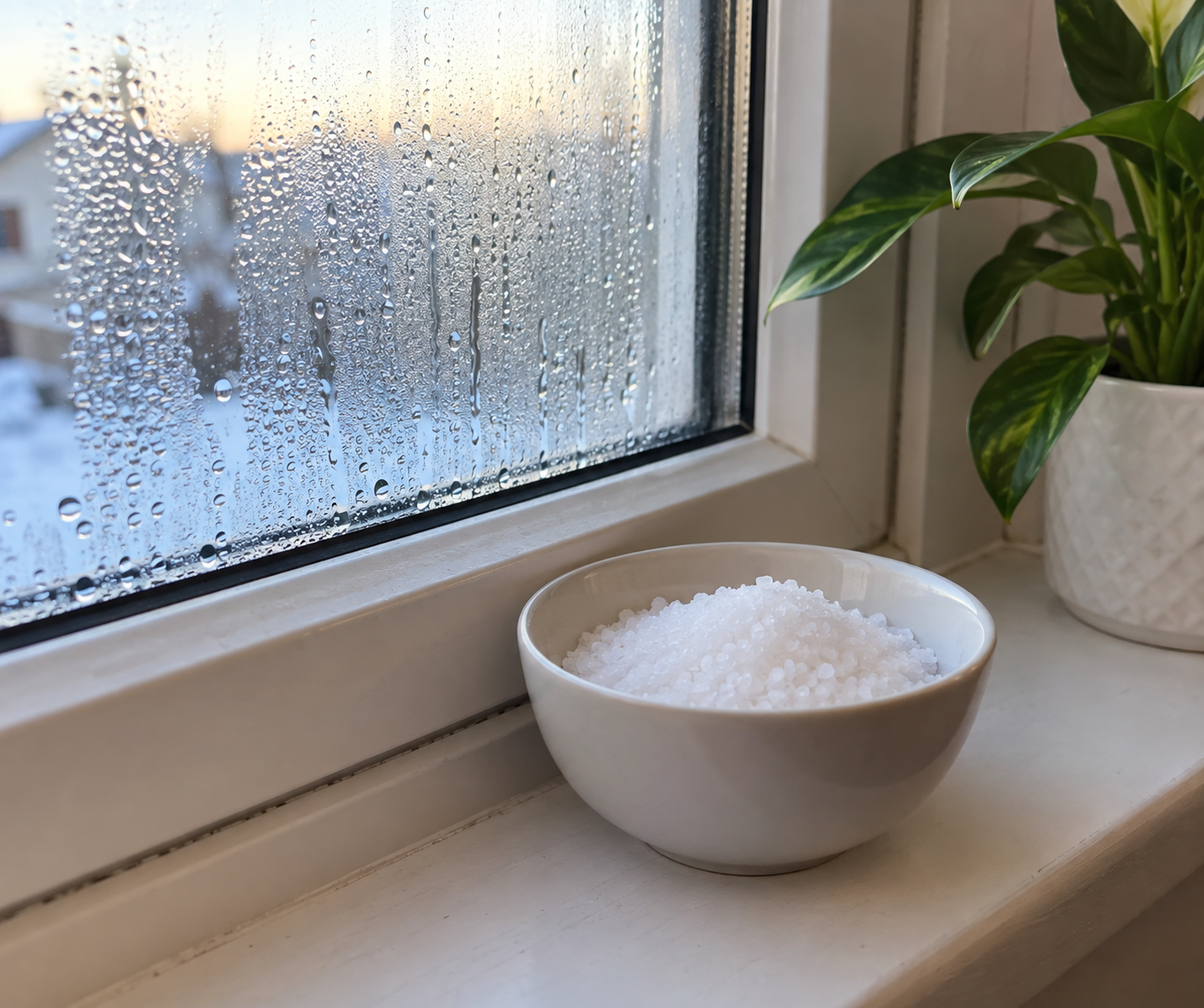
If you’ve ever noticed a small bowl of salt sitting on someone’s windowsill, you might have wondered:
Why would anyone put salt next to a window?
It’s an old household trick that has recently resurfaced online, especially when temperatures drop and people begin noticing wet windows in the morning.
Some claim salt can stop condensation. Others say it prevents mold or acts like a homemade dehumidifier.
But does it actually work?
The answer is a little more complicated—and much more interesting—than many viral posts suggest.
Why Do Windows Get Wet in the First Place?
Before talking about salt, it’s important to understand why those water droplets appear.
The air inside your home contains water vapor.
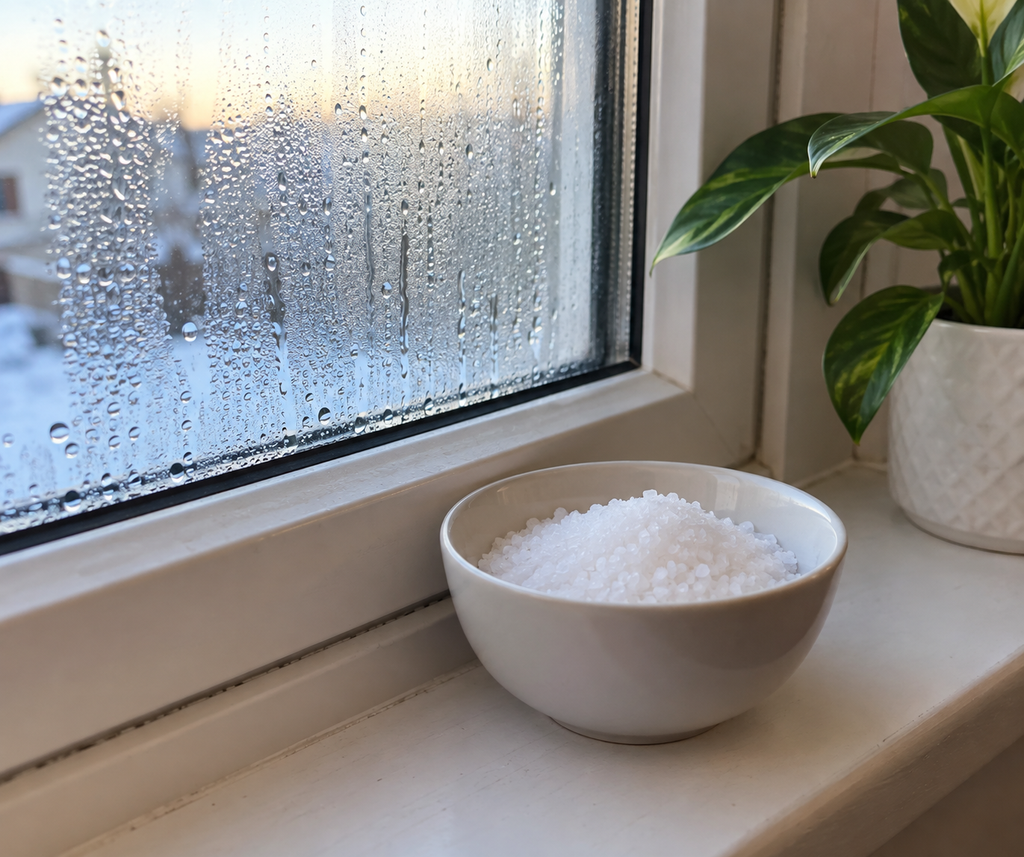
When warm, humid indoor air touches a sufficiently cold window, some of that vapor can turn into liquid water.
That’s condensation.
The U.S. Environmental Protection Agency notes that moisture often condenses on cold surfaces such as windows during colder weather, and visible window condensation can be a sign of elevated indoor humidity.
That’s why you may wake up on a cold morning and find the inside of your windows covered in droplets even though it hasn’t rained indoors.
So Why Put Salt Near the Window?
Here’s where the popular household trick comes in.
Salt interacts with moisture in the surrounding air under the right humidity conditions.
Sodium chloride—the ordinary chemical compound in table salt—has well-established behavior in relation to humidity. Historical standards work and more recent NIST research place sodium chloride’s equilibrium/deliquescence region at roughly 75% relative humidity, depending on conditions.
This helps explain why salt can become damp or clumpy in humid environments.
So the basic idea behind the windowsill trick isn’t completely imaginary:
Put salt near a damp window, and the salt may interact with some moisture in very humid air.
But there’s an important catch.
A Bowl of Salt Is Not a Real Dehumidifier
This is where social-media versions of the trick often exaggerate what salt can accomplish.
A small bowl of ordinary table salt doesn’t have the capacity or airflow of an actual dehumidifier.
Think about the amount of air in an entire bedroom or living room compared with the tiny amount surrounding a bowl.
So while salt may become damp in humid conditions, you shouldn’t expect one bowl on a windowsill to solve a serious indoor-humidity or condensation problem.
If your windows are dripping every morning, the water is telling you something more important than the salt is.
What Your Wet Windows May Actually Be Telling You
Frequent condensation can indicate excess moisture inside the home.
Common sources include everyday activities such as:
- Showering
- Cooking and boiling water
- Dishwashing
- Drying clothes indoors
- Humidifiers
- Plumbing leaks
- Poor ventilation
University of Minnesota Extension lists winter window condensation as one of the common symptoms of excessive moisture in a home.
And this is why repeatedly wiping the glass—or putting salt beside it—may address only the visible symptom rather than the source.
The Bigger Concern: Persistent Moisture
A little condensation occasionally isn’t the same as having a major moisture problem.
But persistent dampness deserves attention.
Moisture is one of the conditions mold needs to grow. The EPA emphasizes that moisture control is central to controlling indoor mold and recommends acting quickly when condensation or moisture collects on windows, walls, or pipes.
So if you’re constantly finding puddles along the bottom of your windows, don’t simply keep replacing bowls of salt.
Look for the reason the moisture is there.
What Should You Do Instead?
For a minor problem, improving ventilation may make a noticeable difference.
Use bathroom exhaust fans while showering and kitchen exhaust ventilation when cooking. When outdoor conditions make it practical, ventilation can also help remove moist indoor air.
For more persistent humidity, a properly sized dehumidifier or air conditioner may be appropriate.
The EPA recommends keeping indoor relative humidity below 60%, ideally around 30–50%, as part of moisture and mold control.
A simple hygrometer can tell you far more about what’s happening in your home than guessing based on how damp a bowl of salt feels.
Don’t Forget to Check for Leaks
This is particularly important.
If one window or wall is consistently wet while the rest of your home seems normal, investigate further.
Look around:
Window frames: Is water entering from outdoors?
Walls: Are there stains, peeling paint, or discoloration?
Pipes: Could there be a slow leak nearby?
Bathrooms and kitchens: Are exhaust fans working properly?
Basements: Is moisture entering through the foundation?
EPA guidance recommends identifying and correcting leaks and seepage rather than simply trying to manage the resulting humidity.
What If the Salt Becomes Wet?
This is the part that makes the trick interesting.
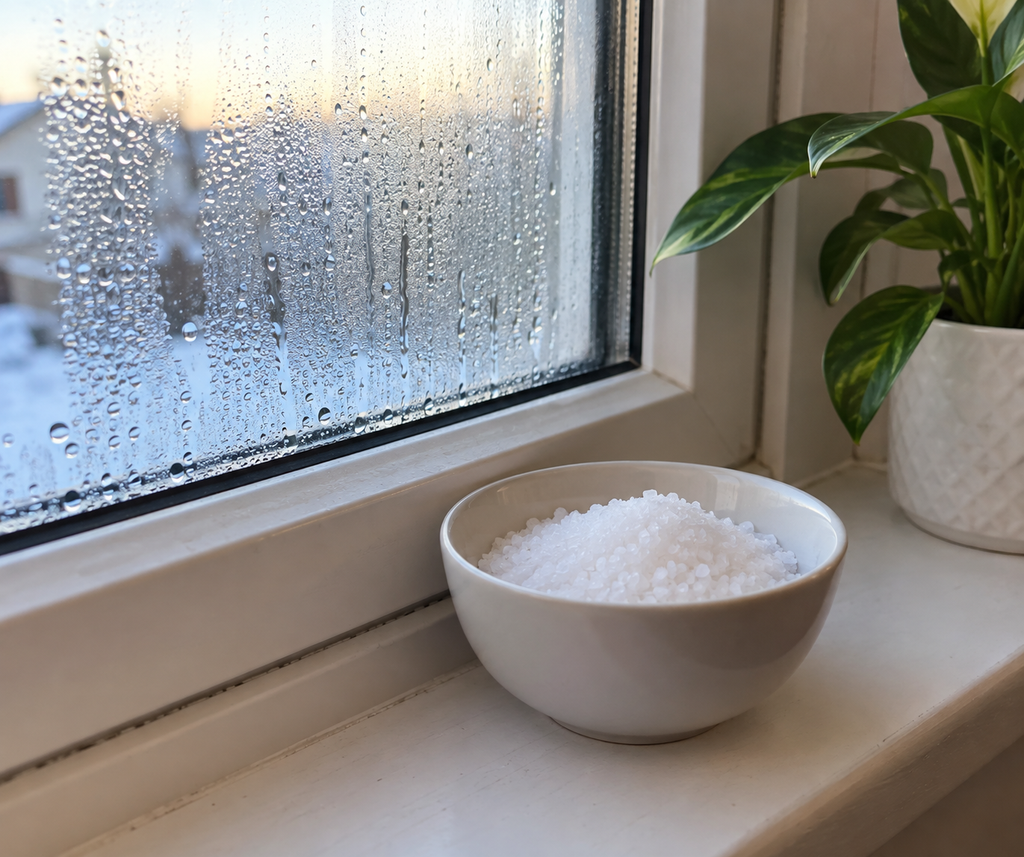
If you leave salt in a very humid environment, you may notice that it begins clumping or becoming wet.
That doesn’t mean the bowl has magically extracted all the dangerous moisture from your room.
It simply means the salt itself has interacted with moisture under those conditions.
And once the salt becomes very wet or dissolves into brine, you obviously don’t want that salty liquid spilling onto wooden windowsills, metal hardware, or other surfaces.
Use a stable, nonporous container if you decide to experiment with the trick.
Can Salt Prevent Mold Around Windows?
Don’t rely on it for that.
Salt sitting in a bowl shouldn’t be treated as a mold-prevention system.
The effective strategy is controlling the moisture that allows mold to grow.
The EPA recommends reducing humidity, improving ventilation, addressing condensation, fixing water problems, and drying wet surfaces promptly.
If mold is already present, the appropriate response depends on the extent of the growth and the underlying moisture source.
Simply placing salt beside it isn’t a substitute for correcting that problem.
What About Rice, Baking Soda, or Cat Litter?
You’ll find plenty of similar internet tips involving bowls of rice, baking soda, charcoal, salt, or other materials.
Some materials can interact with moisture or odors to varying degrees.
But there’s an important distinction between something that can absorb or adsorb some moisture under particular conditions and something capable of controlling the humidity of an entire occupied room.
For a real humidity problem, measure the humidity and address its source.
Don’t assume a small bowl of kitchen ingredients is doing the job of ventilation or a dehumidifier.
There’s Another Reason the Trick Seems to Work
Imagine this scenario:
Someone notices condensation on the bedroom window.
They put a bowl of salt beside it.
The next morning, there’s less condensation.
Naturally, they assume:
“The salt worked!”
Maybe—but not necessarily.
Outdoor temperature, indoor temperature, ventilation, heating, and the amount of moisture generated inside the house can all change from one day to another.
Condensation depends on both moisture levels and the temperature of the surface.
So one clearer window doesn’t prove that the salt was responsible.
A Better 5-Minute Window Check
If you regularly wake up to wet windows, try this instead.
First, wipe the condensation away so the surfaces don’t remain wet.
Then check your indoor relative humidity with a hygrometer.
Think about what happened in the home the previous evening: Did someone take a long shower? Was dinner simmering for hours? Were clothes drying indoors?
Check the window frame and surrounding wall for signs of leaks or persistent dampness.
Finally, improve ventilation and monitor whether the condensation decreases.
This gives you useful information about the cause, rather than simply hiding the symptom.
So, Should You Put a Bowl of Salt Near Your Window?
You can certainly experiment with it.
There’s real science behind salt’s interaction with humidity, so the idea isn’t pure nonsense.
But keep your expectations realistic.
A bowl of salt may become damp under humid conditions, yet it isn’t a reliable replacement for proper ventilation, fixing leaks, controlling indoor humidity, or using a dehumidifier when one is needed.
And that’s the part viral household tips often leave out.
The most useful thing about finding condensation on your windows isn’t discovering a clever place to put your salt.
It’s recognizing that your home may be giving you a clue about its moisture levels.
Sometimes the simple trick gets your attention—but understanding the reason behind the problem is what actually helps you fix it.