You wash your sheets regularly. You change your pillowcases. Your bedroom looks clean.
Then one day, you remove the pillowcase and discover something unpleasant underneath:
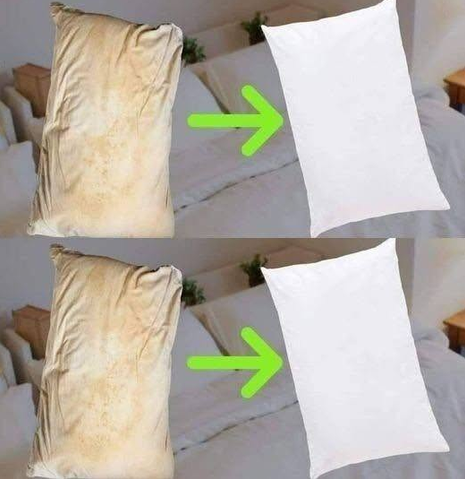
your once-white pillow has turned yellow.
Yellow stains on pillows are extremely common. Over time, sweat, body oils, saliva, skin-care products, damp hair, and everyday moisture can work their way through a pillowcase and into the pillow itself.
The good news is that a yellow pillow doesn’t automatically need to be thrown away.
If the pillow’s care label allows machine washing, a proper deep clean may dramatically improve its appearance and freshness.
But before copying viral cleaning recipes that combine several powerful products, there are a few important things to know.
Why Do White Pillows Turn Yellow?
Pillows spend several hours in close contact with your face and head every night.
Even when you don’t feel sweaty, your body releases moisture while you sleep. Your skin and hair also naturally produce oils.
Over months or years, a pillow may accumulate residue from sweat, body oils, saliva, facial moisturizers, hair products, makeup, and damp hair.
Because pillowcases don’t create a completely impermeable barrier, some of that material eventually reaches the pillow.
The result can be the familiar yellow or brownish discoloration seen on older pillows.
And while washing may remove a lot of buildup, very old discoloration isn’t always completely reversible.
Before Washing: Read the Care Label
This is the most important step.
Not every pillow should be put in a washing machine.
Some synthetic and down or feather pillows may be washable, depending on their construction and manufacturer instructions.
Memory foam and latex pillows are different.
They can be damaged by machine washing, agitation, soaking, or high heat, depending on the product. For these pillows, manufacturers often recommend cleaning the removable cover and spot-cleaning the foam rather than immersing the entire pillow.
So don’t judge by appearance.
Check the label first.
If it says “machine washable,” continue with the washing instructions.
If it says “spot clean only” or gives special instructions, follow those instead.
How to Deep-Clean a Machine-Washable Yellow Pillow
Once you’ve confirmed that the pillow can be washed, start by removing the pillowcase and any removable protective cover.
Inspect the pillow carefully.
If it has holes or torn seams, repair them before washing. Otherwise, the filling may escape during the cycle.
Next, treat heavily stained areas before washing.
Step 1: Pretreat the Yellow Areas
Apply a small amount of appropriate laundry stain remover to the discolored areas, following the stain remover’s label.
Alternatively, some washable pillows can be pretreated with a small amount of liquid laundry detergent.
Gently work the product into the stained fabric without aggressively scrubbing.
Allow it to sit for the amount of time recommended on the product label.
Don’t assume that leaving a chemical treatment on longer will produce better results.
Step 2: Use the Correct Amount of Detergent
More detergent does not necessarily mean cleaner pillows.
In fact, too much detergent can be difficult to rinse from thick pillow filling.
Use an appropriate amount of laundry detergent according to the detergent instructions, washing-machine recommendations, and load size.
A low-sudsing detergent can be especially helpful in high-efficiency washing machines.
Step 3: Choose the Appropriate Cycle
Follow the pillow’s care label for water temperature and cycle selection.
If the manufacturer permits it, a gentle or delicate cycle is often suitable for pillows that require less aggressive agitation.
The exact setting depends on the filling.
Don’t automatically choose the hottest water because you want a “deeper” clean.
High temperatures can damage some synthetic fills, foams, fabrics, or adhesives.
Step 4: Wash Two Pillows When Appropriate
If you have a machine that allows it and the pillow instructions permit machine washing, washing two similar pillows together can help keep the load more balanced.
This can be especially useful in certain washing machines during the spin cycle.
Don’t force two oversized pillows into a small washer, however.
They need enough room for water and detergent to circulate.
Step 5: Add an Extra Rinse
Pillows are thick.
Detergent can become trapped inside the filling more easily than it does in a T-shirt or sheet.
An additional rinse cycle can therefore be helpful.
After washing, gently press the pillow.
If you notice obvious soapiness or excessive suds, another rinse may be appropriate.
What About the Viral Baking Soda Trick?
Baking soda is frequently recommended online for yellow pillows.
It can be useful as a laundry deodorizing aid in some situations, but don’t expect it to magically return every old pillow to brilliant white.
Yellowing can result from years of oils and moisture, and some discoloration may have permanently affected the material.
More importantly, don’t combine random cleaning chemicals simply because several individual ingredients are useful on their own.
A complicated homemade mixture isn’t automatically more effective or safer than a properly formulated laundry product.
Can You Use Oxygen Bleach?
For compatible washable white fabrics, an oxygen-based laundry bleach/stain remover can be an option for stubborn discoloration.
These products typically use oxygen-based bleaching chemistry rather than chlorine bleach.
Follow the product label carefully, including instructions about concentration, soaking time, water temperature, and fabric compatibility.
Colorfastness should be considered when cleaning colored or patterned pillows.
And remember:
“Bleach” is not one universal product.
Oxygen bleach and chlorine bleach are chemically different.
Should You Use Chlorine Bleach?
Only if both the pillow’s care instructions and the bleach product label allow it.
Chlorine bleach can damage certain fibers, finishes, and colors. Using excessive amounts can also make rinsing difficult and may weaken incompatible materials.
Never pour concentrated chlorine bleach directly onto a pillow.
And never assume a pillow is chlorine-bleach-safe simply because its outer fabric is white.
The filling and internal construction matter too.
Important: Never Mix Chlorine Bleach With Vinegar
Many internet cleaning recipes recommend vinegar.
Others recommend chlorine bleach.
That does not mean the two should be combined.
Never mix chlorine bleach with vinegar or other acidic cleaners.
The combination can release dangerous chlorine gas.
Similarly, chlorine bleach should never be mixed with ammonia-containing cleaners.
When using any bleaching or disinfecting product, follow the manufacturer’s instructions rather than inventing a chemical mixture at home.
Can Vinegar Make Pillows White Again?
Vinegar isn’t a magical whitening solution.
While diluted vinegar has household uses, it cannot necessarily reverse years of yellow discoloration.
If your washing-machine or pillow manufacturer permits its use, follow their instructions carefully.
But don’t combine vinegar with chlorine bleach, and don’t assume adding vinegar to every wash will improve results.
A suitable detergent and stain treatment are usually a more predictable starting point.
Drying the Pillow Is Just as Important as Washing It
A pillow can look beautifully clean after washing and still develop an unpleasant odor if it remains damp inside.
That’s because the exterior may feel dry while moisture remains trapped deep in the filling.
A pillow should be completely dry before you put it back on the bed.
Follow the care label for drying instructions.
Some washable pillows can go into a tumble dryer at an approved low or moderate setting.
Others may require air drying.
How to Keep the Filling Fluffy
For pillows that are dryer-safe, periodically stopping the dryer and fluffing the pillow can help redistribute the filling.
Some people use clean dryer balls to help prevent clumping when the manufacturer’s instructions permit tumble drying.
The goal is to keep the filling separated while moisture escapes.
Don’t use excessive heat simply to speed things up.
High temperatures can damage certain synthetic materials.
How Do You Know the Center Is Dry?
Don’t rely only on the surface.
Press firmly into several areas of the pillow.
Check for cool or damp-feeling spots.
Smell the pillow.
If it still feels damp or has a musty odor, it needs more drying time.
For a thick pillow, complete drying can take considerably longer than expected.
Putting a damp pillow into a pillowcase and immediately returning it to bed can trap moisture.
What If Your Pillow Is Memory Foam?
This requires a different approach.
Don’t automatically put a solid memory-foam pillow in the washing machine.
Machine agitation and saturation can damage foam structure, and drying a deeply soaked foam pillow can be difficult.
Instead, follow the manufacturer’s instructions.
Typically, this may involve removing and washing the outer cover separately and spot-cleaning the foam with a small amount of suitable cleaning solution.
Avoid soaking the foam unless its manufacturer specifically says it is washable.
Allow it to dry thoroughly before replacing the cover.
What About Latex Pillows?
Latex also requires special care.
A washing machine or tumble dryer may damage some latex pillows.
Follow the manufacturer’s instructions for the exact product.
For many foam-based pillows, cleaning the removable protective cover regularly is far easier than trying to wash the internal material.
What About Feather and Down Pillows?
Some feather and down pillows are machine washable.
Others aren’t.
Again, the label decides.
When washing is permitted, thorough rinsing and complete drying are particularly important.
Damp feather or down filling can clump and develop unpleasant odors.
Drying may take multiple cycles at an approved temperature.
Break apart clumps and fluff the pillow periodically if the manufacturer’s instructions permit it.
How Often Should You Wash Your Pillows?
There isn’t one schedule appropriate for every pillow.
Your sleeping environment, sweating, allergies, pillow filling, pillowcase use, and manufacturer’s recommendations all matter.
However, washing the pillowcase regularly and using a removable pillow protector can significantly reduce how much sweat and oil reach the pillow itself.
Machine-washable pillows can then be cleaned periodically according to their care instructions rather than waiting until they’re heavily yellow.
The Simple Trick That Helps Prevent Yellow Pillows
The easiest stain to remove is the one that never reaches the pillow.
Use a washable pillow protector underneath your regular pillowcase.
A protector provides an additional barrier between your body and the pillow.
Then wash the protector regularly along with your bedding, according to its care label.
This won’t make a pillow immune to discoloration forever, but it can substantially reduce direct exposure to sweat, oils and other residue.
Don’t Go to Bed With Soaking-Wet Hair
Sleeping with wet hair can introduce additional moisture into your pillow.
If possible, allow your hair to dry before going to bed.
This is especially helpful with thick pillows that don’t dry quickly once moisture penetrates the filling.
Wash Pillowcases Regularly
Pillowcases are the first line of defense.
They accumulate oils, sweat, hair products and skin-care residue much faster than the pillow underneath.
Regular washing prevents some of that buildup from gradually migrating deeper into the pillow.
If you sweat heavily at night, changing pillowcases more frequently may help.
Why Does My Pillow Still Smell After Washing?
The most likely possibilities include trapped detergent, incomplete rinsing, or residual moisture.
First, check whether the pillow is truly dry all the way through.
If it smells musty after washing, don’t simply cover it with a fresh pillowcase and continue sleeping on it.
If the care label allows rewashing, rinse it thoroughly and dry it completely.
Persistent musty odor—especially with visible mold growth—is a different issue from ordinary yellow staining.
Replacement may be the safer and more practical choice.
When Should You Replace a Pillow Instead of Washing It?
Cleaning can’t restore every pillow.
Consider replacement when the pillow has lost its support, filling remains permanently clumped, foam is crumbling, there is persistent odor despite proper cleaning, visible mold cannot be safely addressed, or the pillow is physically deteriorating.
A perfectly white pillow isn’t necessarily a good pillow.
Its primary job is to provide appropriate comfort and support.
If it has become flat, lumpy, damaged, or structurally degraded, whitening the cover won’t fix the underlying problem.
Frequently Asked Questions
Why is my pillow yellow even though I use a pillowcase?
Pillowcases aren’t waterproof. Sweat, skin oils, saliva, damp hair, and personal-care products can gradually migrate through the fabric and discolor the pillow underneath.
Can yellow pillows become completely white again?
Sometimes they can improve dramatically, but not always. Old stains and material discoloration may remain even after proper washing.
Can I wash pillows in a washing machine?
Some pillows can be machine washed, while others cannot. Always check the care label first. Foam and latex pillows often require different cleaning methods from washable synthetic, feather, or down pillows.
Can I wash two pillows together?
When your washing machine has enough capacity and the pillow care instructions permit machine washing, washing two similar pillows together may help balance the load.
Should I use hot water?
Only when permitted by the pillow’s care label. Hotter isn’t automatically better, and excessive heat may damage certain materials.
Can I put pillows in the dryer?
Only if the care label allows tumble drying. Use the recommended temperature and make sure the pillow dries completely inside.
Can I mix bleach and vinegar to remove yellow stains?
No. Never mix chlorine bleach with vinegar or other acids. Dangerous chlorine gas can be produced.
Why is drying so important?
A pillow can retain moisture deep inside even after its surface feels dry. Persistent moisture can contribute to unpleasant odors and microbial growth.
Can I wash memory foam in the machine?
Don’t assume so. Many solid memory-foam pillows should not be machine washed or fully submerged. Follow the manufacturer’s cleaning instructions for your exact pillow.
Final Thoughts
A yellow pillow isn’t necessarily a ruined pillow.
If the care label says it is washable, the safest approach is surprisingly simple:
Pretreat compatible stains, use the correct amount of laundry detergent, wash according to the care label, rinse thoroughly, and dry the pillow completely.
For stubborn yellowing, an oxygen-based laundry stain remover may help when compatible with the pillow and used exactly as directed.
But resist the temptation to throw five different household chemicals into the washing machine.
More chemicals don’t automatically mean better cleaning.
And never combine chlorine bleach with vinegar, ammonia, or other incompatible cleaners.
Once your pillows are clean, add washable pillow protectors underneath the pillowcases. That inexpensive extra layer can make future cleaning much easier and help keep sweat, body oils and everyday moisture away from the pillow itself.
Your old pillow may never look exactly as it did the day you bought it—but with the right cleaning method, a washable pillow can often become considerably cleaner, fresher and more inviting again.