A stroke can happen suddenly and without much warning. One moment a person may be talking normally, and minutes later they may struggle to speak, walk, see clearly, or move one side of their body.
That’s why recognizing the symptoms quickly is so important.
A stroke occurs when blood flow to part of the brain is blocked or when a blood vessel in the brain ruptures. Without adequate blood and oxygen, brain cells can begin to suffer damage within minutes.
But there’s an important correction to viral headlines claiming your body will always warn you that it is “about to have a stroke.”
Many strokes do not provide predictable warning symptoms hours or days beforehand. The classic warning signs are usually symptoms of a stroke or transient ischemic attack (TIA) already occurring.
If any of these symptoms appear suddenly, don’t wait to see whether they disappear.
Treat the situation as a medical emergency.
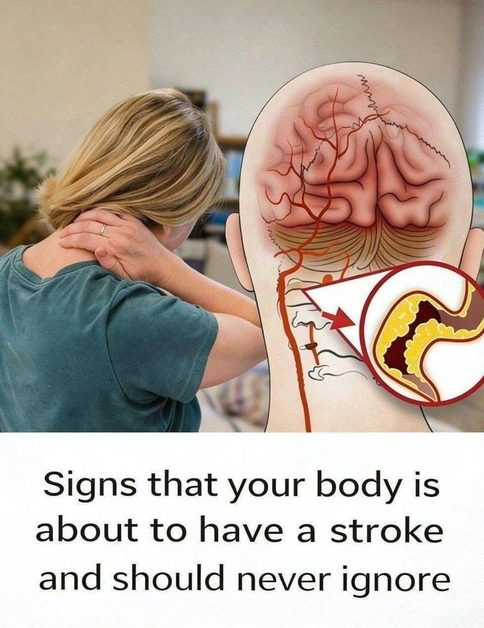
Why Every Minute Matters During a Stroke
Stroke treatment is extremely time-sensitive.
The CDC emphasizes that fast treatment can reduce the amount of brain damage caused by a stroke. The American Stroke Association likewise stresses that immediate emergency treatment can improve survival and reduce disability.
This is why doctors don’t recommend waiting at home to see whether a person “gets better.”
The faster stroke is recognized, the faster medical professionals can determine what type of stroke has occurred and which treatment may be appropriate.
Here are 10 symptoms you should never ignore when they appear suddenly.
1. Sudden Weakness on One Side of the Body
One of the most recognizable stroke symptoms is sudden weakness affecting one side of the body.
A person may suddenly have difficulty lifting one arm.
Their leg may feel unusually weak.
They may start dropping objects.
Or they may have trouble standing.
The CDC lists sudden weakness or numbness of the face, arm, or leg—particularly on one side—as a major stroke warning sign.
A simple test is to ask the person to raise both arms.
If one arm drifts downward or cannot be raised normally, treat that as a possible stroke symptom.
2. Sudden Numbness
Stroke doesn’t always cause complete paralysis.
Sometimes the first noticeable symptom is numbness.
A person’s face, arm, hand, or leg may suddenly feel numb or strangely different.
Again, the fact that it often affects one side of the body is especially important.
Don’t dismiss sudden unexplained numbness as simply “sleeping on your arm wrong” if it appears alongside other neurological symptoms.
Call emergency medical services.
3. One Side of the Face Suddenly Droops
Facial drooping is another classic stroke warning sign.
Ask the person to smile.
Does the smile look uneven?
Does one corner of the mouth remain lower?
Does one side of the face appear numb or difficult to control?
The American Stroke Association includes Face Drooping as the “F” in its B.E. F.A.S.T. stroke-recognition method.
Even if the person says they feel fine, sudden facial asymmetry requires urgent attention.
4. Sudden Trouble Speaking
A person having a stroke may suddenly begin slurring words.
They might know exactly what they want to say but struggle to produce the words.
Their sentences may sound strange.
Or they may be unable to speak at all.
Ask the person to repeat a simple sentence.
For example:
“The sky is blue.”
If their speech suddenly becomes slurred, confused, unusual, or difficult to understand, call emergency services immediately.
5. Sudden Difficulty Understanding Speech
Stroke can affect language comprehension as well as speaking.
Someone may hear you clearly but suddenly struggle to understand what you’re saying.
They may look confused by ordinary questions.
They might give answers that don’t match what was asked.
Or they may suddenly seem disoriented during a normal conversation.
The CDC identifies sudden confusion and difficulty speaking or understanding speech as warning signs of stroke.
Don’t assume the person is simply tired or distracted.
6. Sudden Vision Changes
Stroke can affect vision in several ways.
A person may suddenly experience blurred vision, double vision, partial loss of vision, or loss of sight in one or both eyes.
The change may be painless.
That can make it tempting to wait.
Don’t.
Sudden vision problems are included in official stroke warning signs from both the CDC and American Stroke Association.
This is the “E” for Eye/Vision Changes in B.E. F.A.S.T.
7. Sudden Loss of Balance or Coordination
Someone having a stroke may suddenly become unsteady.
They may stumble.
They may have difficulty standing.
Their movements may become poorly coordinated.
Or they may suddenly feel as though they can’t control their body normally.
Sudden trouble walking, loss of balance, or loss of coordination is recognized by the CDC as a possible stroke symptom.
This is particularly concerning when it occurs together with vision changes, weakness, numbness, or speech problems.
8. Sudden Severe Dizziness
Dizziness is extremely common and has many causes that aren’t strokes.
But sudden dizziness accompanied by neurological symptoms deserves urgent attention.
For example, dizziness combined with difficulty walking, double vision, severe imbalance, weakness, or speech changes can be particularly concerning.
The American Stroke Association includes sudden balance problems and dizziness among stroke/TIA warning symptoms.
The key word throughout this article is sudden.
9. A Sudden Severe Headache With No Known Cause
Headaches are extremely common.
Most headaches aren’t strokes.
But a sudden, unusually severe headache with no known cause is a recognized stroke warning sign.
This is especially concerning when accompanied by vomiting, confusion, weakness, altered consciousness, vision changes, or difficulty speaking.
Don’t try to diagnose the cause at home.
Seek emergency medical evaluation.
10. Sudden Difficulty Walking
Stroke can abruptly interfere with the brain’s ability to coordinate movement.
Someone may suddenly walk strangely, stagger, fall, or be unable to walk normally.
They might describe their leg as not doing what they want it to do.
The CDC specifically lists sudden trouble walking as a stroke warning sign.
Again, even one sudden neurological symptom can justify emergency action.
The Easiest Way to Remember Stroke Symptoms: B.E. F.A.S.T.
You don’t have to memorize a long medical checklist.
The American Stroke Association uses B.E. F.A.S.T.:
B — Balance: Sudden loss of balance or coordination.
E — Eyes: Sudden vision changes.
F — Face: One side of the face droops or feels numb.
A — Arms: One arm becomes weak, numb, or drifts downward.
S — Speech: Speech becomes slurred, strange, or difficult.
T — Time: Call emergency medical services immediately.
The last letter may be the most important.
Don’t wait.
What If the Symptoms Disappear After a Few Minutes?
This is one of the most dangerous mistakes people make.
Imagine someone suddenly develops:
arm weakness,
slurred speech,
facial drooping,
or vision loss.
Five or ten minutes later, everything seems normal again.
It’s tempting to think:
“Whatever happened has passed.”
But temporary stroke-like symptoms can indicate a transient ischemic attack (TIA).
A TIA occurs when blood flow to the brain is temporarily blocked. Symptoms can disappear, but the event can signal a serious risk of a subsequent stroke.
The American Stroke Association states that stroke-like symptoms that disappear still require emergency assessment.
Never ignore them simply because the person feels better.
Is a TIA a “Mini-Stroke”?
You may hear a TIA called a mini-stroke.
The American Stroke Association prefers the term “warning stroke” because “mini” can make the condition sound less serious than it really is.
A TIA may not cause permanent brain damage in the same way as a completed stroke, but it can be an important warning that urgent medical evaluation and prevention are needed.
The symptoms can be indistinguishable from those of a stroke while they’re happening.
You cannot safely determine at home which one you’re experiencing.
Don’t Try to Sleep It Off
If someone suddenly develops possible stroke symptoms, don’t tell them to lie down and see how they feel tomorrow.
Don’t assume they’re exhausted.
Don’t assume it’s anxiety.
Don’t wait for another symptom.
Stroke is a medical emergency.
The American Stroke Association advises calling emergency services even if only one recognized stroke symptom appears.
Don’t Drive Yourself to the Hospital
If stroke is suspected, use your local emergency medical service rather than having the affected person drive.
The CDC specifically advises calling emergency services rather than driving to the hospital. Emergency medical personnel can begin assessment and treatment on the way and alert the hospital that a suspected stroke patient is arriving.
If you’re outside the United States, call your country’s local emergency number.
Remember the Time the Symptoms Started
This detail can be extremely important.
Try to determine exactly when symptoms first appeared—or when the person was last known to be normal if the onset wasn’t witnessed.
Write the time down if necessary.
The CDC specifically recommends noting when symptoms first appear because this information helps healthcare professionals determine appropriate treatment.
Don’t rely on remembering it later during a stressful emergency.
Why Stroke Treatment Can’t Wait
There are two major categories of stroke.
An ischemic stroke occurs when blood flow is blocked, usually by a clot.
A hemorrhagic stroke occurs when a blood vessel ruptures and bleeding occurs in or around the brain.
Treatment differs dramatically depending on which type has occurred.
For eligible patients with ischemic stroke, clot-dissolving medication may be used within a limited treatment window. Some eligible patients with large-vessel blockages may undergo mechanical thrombectomy to physically remove the clot.
This is another reason not to self-treat suspected stroke at home.
Medical imaging and professional assessment are needed to determine what’s actually happening.
Are There Really “Early Warning Signs” Days Before a Stroke?
This is where many social-media articles become misleading.
There isn’t a reliable checklist of ordinary sensations that tells everyone:
“You’re definitely going to have a stroke next week.”
Stroke symptoms characteristically appear suddenly.
A TIA can occur before a subsequent stroke, but that’s itself a medical emergency requiring immediate evaluation—not a harmless advance warning to mention at your next routine appointment.
So be cautious with viral claims suggesting that neck pain, ordinary fatigue, random headaches, hiccups, or other nonspecific symptoms reliably predict an impending stroke.
Those symptoms have many possible causes.
The evidence-based warning signs to memorize are sudden neurological changes—especially those summarized by B.E. F.A.S.T.
Who Is at Greater Risk of Stroke?
Stroke can happen to anyone, including younger adults.
However, certain conditions and behaviors increase risk.
Important risk factors include high blood pressure, diabetes, smoking, heart disease, and atrial fibrillation. Age also increases risk.
Managing these factors with appropriate medical care can reduce stroke risk.
That may involve blood-pressure management, diabetes treatment, stopping smoking, regular physical activity, dietary changes, and taking prescribed medication correctly.
Never stop prescribed blood-pressure medication, anticoagulants, antiplatelet medication, or other cardiovascular medicines because of something you’ve read online.
Discuss medication changes with your healthcare professional.
Stroke Can Happen During Sleep
Not every person is awake when symptoms begin.
Someone may go to bed feeling normal and wake with facial weakness, numbness, speech problems, or another neurological deficit.
This is sometimes called a wake-up stroke.
Don’t assume that treatment is impossible simply because you don’t know the exact onset time.
Emergency evaluation is still necessary because modern imaging and other clinical information may help specialists determine treatment options.
Call emergency services immediately.
What Should You Do While Waiting for an Ambulance?
After calling emergency services, follow the dispatcher’s instructions.
Keep the person somewhere safe.
Note when symptoms began or when they were last known well.
Don’t give them food or drink if swallowing may be impaired.
Don’t give medications unless emergency professionals specifically instruct you to do so.
In particular, don’t automatically give aspirin.
Why?
Because although aspirin may be useful in certain ischemic strokes, some strokes involve bleeding. You cannot reliably distinguish these at home.
Let medical professionals determine the appropriate treatment.
What If You’re Not Sure It’s a Stroke?
Call anyway.
Stroke can sometimes resemble other conditions, and other conditions can resemble stroke.
That’s exactly why professional evaluation is necessary.
You aren’t expected to diagnose a stroke yourself.
Your job is to recognize a possible emergency and act quickly.
The American Stroke Association’s message is straightforward: when stroke symptoms are suspected, a false alarm is preferable to delaying treatment for a genuine stroke.
Frequently Asked Questions
What is usually the first sign of a stroke?
There isn’t one universal first symptom. Stroke may begin with sudden facial drooping, arm weakness or numbness, speech difficulty, vision changes, severe imbalance, or another sudden neurological symptom.
Can stroke symptoms come and go?
Yes. Temporary stroke-like symptoms can occur with a TIA. Even when symptoms completely disappear, emergency medical evaluation is necessary.
Can a stroke happen without a headache?
Yes. A severe unexplained headache is only one possible stroke symptom. Many strokes occur without one.
Can young people have strokes?
Yes. Stroke isn’t exclusively a disease of older adults. The American Stroke Association emphasizes that stroke can happen at any age.
Does facial drooping always mean stroke?
No. Other medical conditions can cause facial weakness. But sudden facial drooping should be treated as a possible stroke until professionally evaluated, particularly when accompanied by arm weakness or speech changes.
Can dizziness mean a stroke?
Dizziness has many non-stroke causes. However, sudden severe dizziness accompanied by loss of balance, trouble walking, double vision, weakness, numbness, or speech difficulty requires urgent assessment.
Should I wait if symptoms are mild?
No. Mild or temporary symptoms can still represent stroke or TIA. Don’t wait for symptoms to become severe before seeking emergency help.
Final Thoughts
When it comes to stroke, don’t spend precious time trying to decide whether the symptoms are “bad enough.”
Remember:
Balance suddenly lost.
Eyes suddenly affected.
Face drooping.
Arm weak or numb.
Speech suddenly abnormal.
Time to call emergency services.
That’s B.E. F.A.S.T.
Stroke can cause permanent brain injury within minutes, but rapid recognition and treatment can make an enormous difference.
And if the symptoms disappear?
Still seek emergency medical attention.
It could have been a TIA, and that warning should never be ignored.