Finding a strange insect crawling across a bathroom floor, hiding near a window, or appearing underneath a damp towel can immediately make you wonder:
“Why is this bug inside my house—and does it mean I have a bigger problem?”
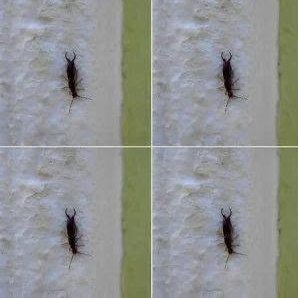
The insect in the viral image appears consistent with an earwig, a small elongated insect best known for the distinctive pair of pincer-like appendages at the end of its abdomen.
Their appearance can be intimidating, and social-media posts sometimes claim that finding an earwig is a serious warning sign.
The reality is much less frightening.
Earwigs are generally nuisance insects rather than dangerous household pests. But seeing them repeatedly can sometimes point to environmental conditions around your home—especially excess moisture and easy entry points—that are worth investigating.
How to Recognize an Earwig
Earwigs have a fairly distinctive appearance.
Adults typically have an elongated, flattened body and a noticeable pair of forceps or pincers—technically called cerci—at the rear.
Depending on the species and sex, those pincers may appear relatively straight or strongly curved.
The pincers are one of the main reasons people are frightened when they first encounter the insect.
However, their intimidating appearance is misleading.
The University of Minnesota Extension explains that earwigs don’t damage people, property, or food when they wander indoors and are essentially household nuisances.
Are Earwigs Dangerous to Humans?
Generally, no.
Earwigs aren’t considered a significant health hazard in the home.
Their pincers are primarily used for defense and other natural behaviors. An earwig that is handled or trapped against the skin may occasionally pinch, but these insects aren’t roaming through houses looking for humans to attack.
UC Integrated Pest Management states that despite their prominent pincers, earwigs aren’t harmful to people.
So finding one shouldn’t cause panic.
Do Earwigs Crawl Into People’s Ears?
This is probably the most famous story associated with these insects.
The old myth claims that earwigs deliberately crawl into people’s ears while they’re sleeping and somehow burrow into the brain.
That’s not normal earwig behavior.
University of Wisconsin Extension specifically describes the idea that earwigs purposely crawl into sleeping people’s ears and bore into their brains as a myth.
Like many small insects, an earwig could theoretically end up somewhere unusual accidentally.
But they don’t seek out human ears as part of their life cycle.
So Why Are Earwigs Coming Into Your House?
This is the part worth paying attention to.
Earwigs are primarily outdoor insects.
They prefer protected environments that tend to be:
dark, cool, sheltered and moist.
During the day, they commonly hide beneath mulch, leaves, boards, stones, flowerpots and other protected objects. At night, they emerge and search for food.
When environmental conditions change, some can wander indoors.
UC IPM notes that earwigs may seek refuge inside buildings when outdoor conditions become excessively dry, hot, or cold.
That means finding an occasional earwig doesn’t automatically mean they’re breeding throughout your house.
Sign No. 1: There May Be Too Much Moisture Nearby
If you’re seeing earwigs frequently, moisture should be one of the first things you investigate.
Earwigs strongly favor moist environments.
NC State Extension recommends checking areas such as:
- Under sinks
- Around dishwashers
- Near tubs
- Around exterior water faucets
- Near air-conditioning equipment
- Along damp foundations
- In crawl spaces
Reducing excess moisture around these locations can make your property much less attractive to earwigs.
So the real “warning sign” isn’t that an earwig itself is dangerous.
Repeated earwig activity can be a reason to look for persistent damp conditions.
Sign No. 2: Check for Plumbing Leaks
A slow plumbing leak doesn’t always create an obvious puddle.
Sometimes water slowly dampens the area underneath a sink, cabinet, appliance, or pipe.
That creates exactly the kind of sheltered environment many moisture-loving insects prefer.
If earwigs repeatedly appear in one bathroom or kitchen, inspect the nearby plumbing.
Look for:
- Damp cabinet floors
- Dripping connections
- Water stains
- Condensation
- Persistent humidity
- Soft or damaged material
Fixing the moisture source is usually more useful than repeatedly killing individual insects.
Sign No. 3: Your Basement or Crawl Space May Be Damp
Basements and crawl spaces can provide excellent hiding places for earwigs when they’re humid.
University of New Hampshire Extension recommends reducing humidity in damp basements as part of earwig management.
A dehumidifier may help in appropriate situations, but it’s also important to determine why the area is damp.
Possible causes include poor ventilation, plumbing leaks, drainage problems, condensation, or water entering around the foundation.
Persistent moisture deserves attention even without insects because it can contribute to other household problems.
Sign No. 4: You May Have Gaps Around Doors or Windows
Earwigs don’t need an open front door.
Small cracks and gaps can provide enough space for insects to wander indoors.
Common entry points include areas around:
- Exterior doors
- Windows
- Utility pipes
- Wiring
- Foundations
- Door thresholds
- Damaged weather stripping
NC State Extension recommends sealing entry points with materials such as appropriate caulking and weather stripping, particularly around ground-level openings.
If you’re constantly finding earwigs near the same door or window, inspect that area carefully.
Sign No. 5: Your Landscaping May Be Inviting Them Closer
The problem often begins outside.
Earwigs like hiding underneath damp organic material.
That means thick mulch, leaf litter, ground cover, wood piles and other debris directly beside your house can provide excellent shelter.
UC IPM recommends removing or reducing potential hiding places around buildings, including excessive debris, leaves, wood piles and similar organic material.
You don’t necessarily need to remove your entire garden.
The goal is to avoid creating a permanently wet, sheltered zone directly against the foundation.
Sign No. 6: Check Your Gutters and Drainage
Water should move away from your house.
When gutters overflow or downspouts release water directly beside the foundation, the soil around your home can remain persistently wet.
That moisture creates attractive conditions for earwigs and other moisture-associated organisms.
Both NC State Extension and UC IPM recommend managing drainage so that water doesn’t accumulate near the structure.
So if you’re seeing large numbers of earwigs, walk around the house after rain.
Look for areas where water pools or remains damp for unusually long periods.
Sign No. 7: Outdoor Lights Could Be Bringing Them Closer
Earwigs are active primarily at night, and some can be attracted to lights.
If a bright exterior light sits immediately beside a door or window, insects may congregate around the area and eventually find their way inside.
NC State Extension recommends reducing lighting around potential entry points when earwigs are a recurring problem.
UC IPM similarly suggests using outdoor lighting that’s less attractive to insects where appropriate.
Does Finding One Earwig Mean You Have an Infestation?
Usually not.
This is one of the biggest misconceptions created by alarming social-media posts.
University of Minnesota Extension notes that earwigs entering buildings generally do not reproduce indoors and are primarily a nuisance.
Iowa State University similarly describes them as accidental household invaders that don’t cause destruction inside homes.
Finding one earwig could simply mean one insect wandered through an open door or small crack.
Finding many of them repeatedly is a better reason to investigate.
Where Should You Look?
If earwigs keep appearing, start with the location where you find them most often.
If it’s the bathroom, inspect moisture around the tub, toilet and sink.
If it’s the kitchen, look beneath the sink and around the dishwasher.
If it’s the basement, assess humidity and water intrusion.
If they’re appearing around an exterior door, check the weather stripping and nearby landscaping.
Then inspect the outside of the same wall.
You may discover damp mulch, leaf litter, a leaking faucet, poor drainage, or a small entry gap.
What Do Earwigs Eat?
Earwigs are omnivorous and opportunistic feeders.
They may consume:
- Decaying organic material
- Certain plants
- Flowers
- Soft fruit
- Other insects
- Aphids
- Mites
Interestingly, this means earwigs aren’t always “bad” in a garden.
UC IPM notes that while they can damage seedlings, flowers and some fruits, they can also be beneficial because they prey on insects such as aphids.
Their role therefore depends on where they are and what they’re eating.
How to Get Rid of Earwigs Inside Your Home
For an occasional earwig, you don’t necessarily need pesticide.
One of the simplest solutions is:
Vacuum it up or sweep it into a dustpan and remove it.
Both UC IPM and university extension guidance recommend physical removal for occasional indoor earwigs.
Then focus on preventing additional insects from entering.
Step 1: Reduce Moisture
This is probably the most important long-term step.
Repair leaking pipes and faucets.
Improve drainage.
Address damp crawl spaces.
Make sure gutters and downspouts move water away from the foundation.
Allow overly wet landscaping near the house to dry appropriately.
Earwig management becomes much easier when you remove the damp conditions they prefer.
Step 2: Seal Their Entry Points
Inspect around doors and windows.
Replace worn weather stripping.
Repair damaged screens.
Seal cracks around plumbing, utility lines, foundations and other openings where appropriate.
This doesn’t only help with earwigs.
It can also reduce entry by many other crawling insects.
Step 3: Remove Hiding Places Near the House
Clean up unnecessary materials around the foundation.
Pay particular attention to:
wet leaves, excessive mulch, boards, cardboard, wood piles and dense debris.
Earwigs hide during daylight hours, so removing sheltered areas can make your property less attractive.
Step 4: Try Simple Traps
If you have many earwigs outdoors, trapping can help reduce their numbers.
UC IPM recommends simple traps such as rolled newspaper, bamboo tubes or short sections of hose placed near plants before dark.
Earwigs crawl inside seeking daytime shelter.
The traps can then be checked the following morning.
Another method uses a shallow container with vegetable oil, sometimes combined with a small amount of fish oil or similar attractant.
Keep traps safely away from children and pets.
Do You Need Pesticides?
Not necessarily.
For occasional earwigs indoors, pesticides are often unnecessary.
UC IPM specifically states that indoor pesticide treatments won’t prevent additional earwigs from entering and therefore aren’t recommended as the primary solution.
If you have a severe recurring problem that doesn’t improve after moisture control, exclusion and habitat management, consider contacting a qualified pest-management professional.
If pesticides are used, always follow the product label and local regulations.
Do Earwigs Damage Your House?
Unlike termites, earwigs don’t eat the structural wood of your home.
They aren’t known for creating the type of structural destruction associated with termites or carpenter ants.
University of Minnesota Extension states that indoor earwigs don’t damage property or food.
So finding one shouldn’t immediately trigger fears that your house is being destroyed from the inside.
Can Earwigs Indicate Mold?
Not directly.
An earwig isn’t a mold detector.
However, there’s an indirect connection worth understanding.
Earwigs prefer moisture.
Excessive moisture can also contribute to mold growth.
Therefore, repeatedly finding moisture-loving insects in one damp area could be another reason to investigate the underlying moisture problem.
But you cannot conclude:
“I found an earwig, therefore I have mold.”
Those are two different issues.
What About Earwigs in the Bathroom?
Bathrooms provide several things earwigs like:
moisture, darkness and hiding spaces.
If you occasionally find one after leaving a window open, there may be nothing unusual happening.
But if you’re finding them repeatedly, inspect:
- Under the sink
- Around plumbing penetrations
- Behind the toilet
- Around the bathtub
- Near floor drains
- Around windows
- Under damp mats
- Around exterior-facing walls
The insect may simply be revealing an easy route into the room.
What About Earwigs in the Bedroom?
An earwig in your bedroom doesn’t mean it’s searching for your ears.
It most likely wandered inside accidentally.
Remove it and inspect nearby windows, doors and cracks.
If the bedroom is on the ground floor and earwigs appear repeatedly, inspect the landscaping immediately outside the room.
Dense, moist vegetation or mulch against the wall may be contributing to the problem.
Should You Be Worried If You See Baby Earwigs?
Young earwigs resemble smaller versions of adults.
Finding several small insects should prompt a closer inspection of where they’re coming from, but remember that common household earwigs are primarily outdoor insects.
University of Minnesota Extension notes that they generally don’t reproduce indoors.
Look outside near the foundation and in damp sheltered areas.
The Real Warning Sign Isn’t the Insect
This is the most important takeaway.
Social-media headlines may suggest that discovering this insect means something frightening is happening inside your home.
Usually, that’s not true.
An earwig itself is generally harmless.
What deserves attention is why you’re seeing many of them repeatedly.
Recurring earwig activity can suggest that your property offers some combination of:
moisture + shelter + easy entry points.
Fixing those conditions is more effective than simply killing every insect you see.
Frequently Asked Questions
Are earwigs poisonous?
Earwigs aren’t considered poisonous household pests and generally aren’t dangerous to humans.
Can earwigs bite?
They have rear pincers and may occasionally pinch when handled or threatened, but they’re not aggressive insects that hunt or attack people.
Do earwigs crawl into your ears while you’re sleeping?
They don’t purposely seek out human ears. The frightening story that earwigs crawl into people’s ears and burrow into their brains is a myth.
Does one earwig mean an infestation?
No. Earwigs frequently wander indoors accidentally. One insect alone isn’t proof of an infestation.
Why do I keep finding earwigs in my bathroom?
Moisture and accessible hiding places may be attracting them. Check for leaks, humidity and gaps where insects could enter.
Do earwigs damage houses?
They’re primarily nuisance invaders indoors and aren’t structural wood-destroying insects.
What’s the easiest way to remove one?
For occasional indoor earwigs, sweep or vacuum them up. Then concentrate on sealing entry points and reducing moisture.
Final Thoughts
If the insect in the viral photo is indeed an earwig, there’s no reason to panic.
Those frightening-looking pincers make the insect appear far more dangerous than it actually is.
Earwigs are generally harmless to people, don’t normally establish reproducing populations inside houses, and can often be removed simply by sweeping or vacuuming.
But if you’re suddenly finding them again and again, don’t ignore the pattern.
Check your home for excess moisture, leaking plumbing, damp basements or crawl spaces, poorly draining gutters, thick wet mulch near the foundation, and gaps around doors and windows.
In other words, the insect itself usually isn’t the warning.
The conditions that keep attracting it may be what your home is telling you to investigate.