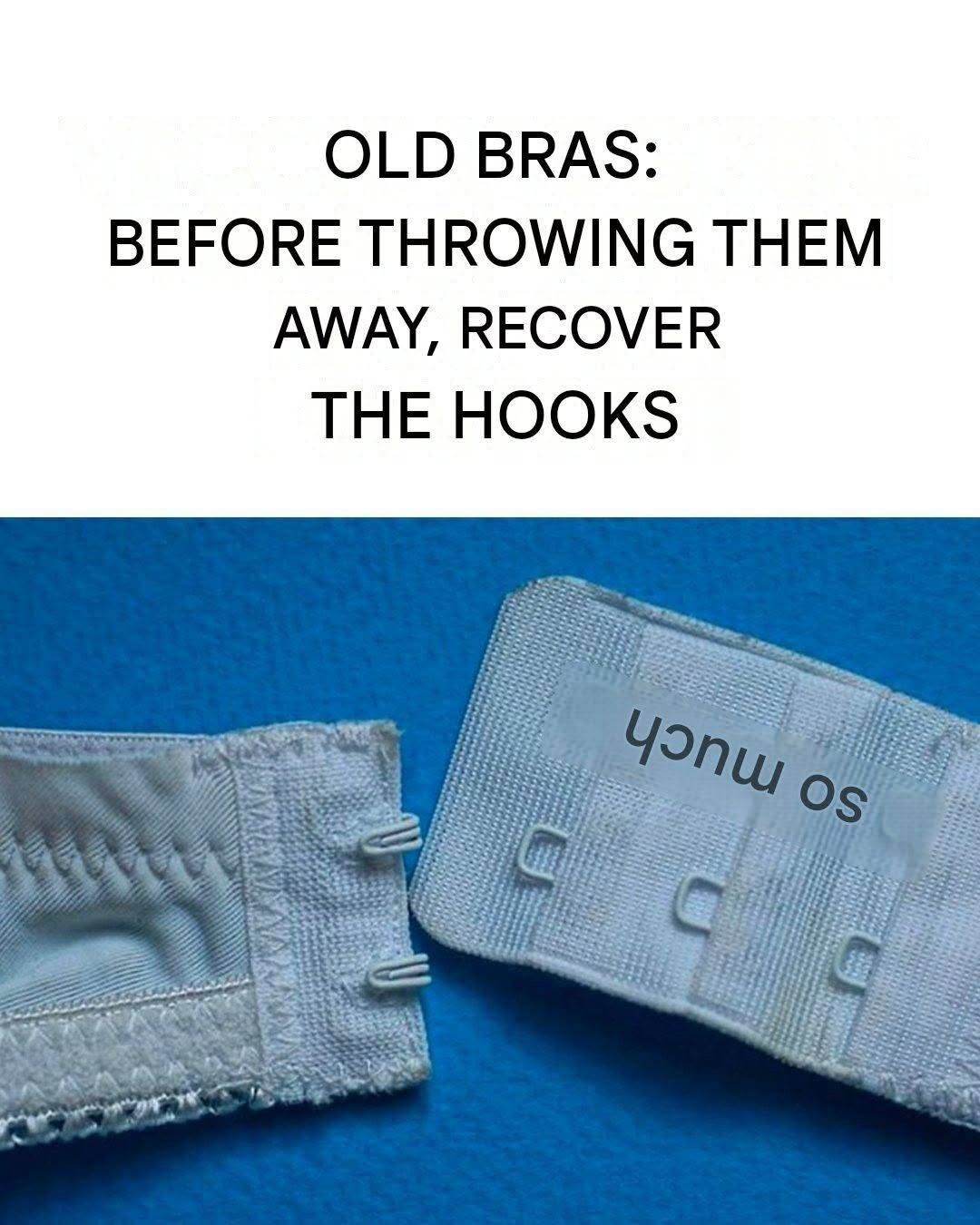
Before throwing away an old bra, take a closer look at the tiny hooks and fabric fasteners on the back. Those small pieces can be transformed into a useful bra extender that gives your favorite bras a little extra room—without spending money on new accessories.
Most people have at least one old bra sitting at the bottom of a drawer.
Maybe the straps have stretched.
Perhaps the cups no longer fit properly.
Or maybe the fabric has become worn after years of washing and regular use.
Eventually, the bra ends up in the trash.
But what if one small part of that old bra could still be useful?
A simple sewing trick circulating on social media suggests saving the hook-and-eye closures from old bras before throwing them away.
With a few basic supplies, these closures can be turned into homemade bra extenders.
The idea is surprisingly practical.
Instead of purchasing an accessory to make a bra band slightly larger, you can reuse a closure from a bra you no longer wear.
This small recycling project can save money, reduce textile waste, and make an uncomfortable bra more wearable.
And the best part?
You don’t need to be an experienced seamstress to try it.
Let’s explore how this simple trick works, how to make your own bra extender, and what you should know before using one.
What Is a Bra Extender?
A bra extender is a small fabric accessory that attaches to the hook-and-eye closure at the back of a bra.
Its purpose is to increase the circumference of the bra band.
Most bras have a fastening system consisting of two separate pieces.
One side contains metal hooks.
The other side contains rows of small fabric-covered loops called eyes.
When the hooks are inserted into the eyes, the bra closes around the body.
A bra extender adds an extra section between these two sides.
This creates additional room without changing the bra itself.
Commercial bra extenders are available in different sizes, colors, and hook configurations.
However, a homemade version can sometimes be created from the closure of an old bra.
Why This Old Bra Trick Is Going Viral
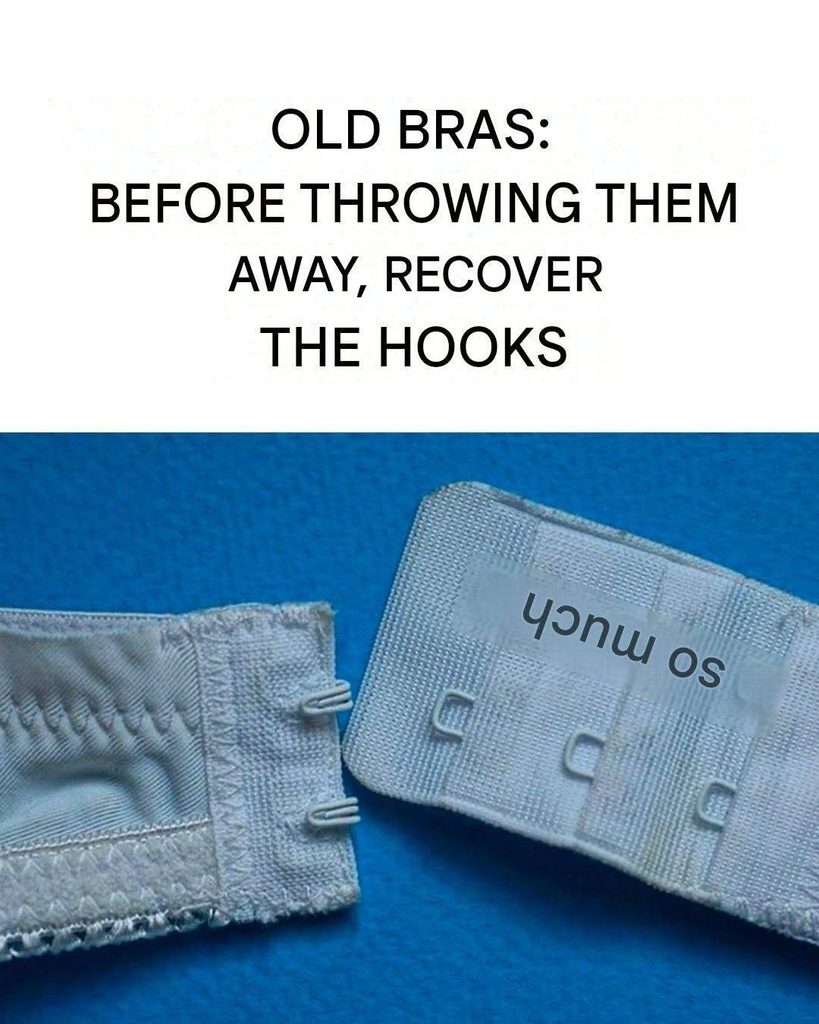
The viral image shows the fastening sections of a bra alongside a simple message:
“OLD BRAS: BEFORE THROWING THEM AWAY, RECOVER THE HOOKS.”
The idea is straightforward.
Rather than discarding every part of a worn-out bra, remove the back closures and repurpose them.
Many people are surprised to discover how useful these small pieces can be.
Bra hooks are usually made from metal, while the surrounding material is reinforced fabric designed to withstand repeated fastening.
If the closure is still in good condition, it may have plenty of life left.
By reusing these pieces, you can create a practical accessory from something that would otherwise be discarded.
The trick is particularly appealing to people who enjoy sewing, upcycling, and inexpensive household solutions.
1. Why You Might Need a Bra Extender
There are several reasons why a bra band may suddenly feel too tight.
Sometimes the bra was simply purchased in the wrong size.
Other times, changes in body shape or temporary fluctuations make an existing bra uncomfortable.
A bra extender can provide a little extra room.
Temporary Weight Changes
Body weight can fluctuate for many reasons.
Even relatively small changes may affect how a bra band feels.
A bra extender may help make a slightly tight band more comfortable.
However, it cannot correct every fitting problem.
Pregnancy
During pregnancy, the rib cage and breasts may change in size.
Some women find that their existing bra bands become uncomfortable before they are ready to purchase new bras.
An extender may provide temporary additional room.
However, maternity bras or properly fitted supportive bras may be more appropriate as pregnancy progresses.
Menstrual Cycle Changes
Hormonal fluctuations can affect breast tenderness and fullness.
Some people notice that bras feel less comfortable at certain points in their menstrual cycle.
An extender may help if the band feels slightly restrictive.
A Bra That Shrunk or Feels Too Snug
Changes in fabric elasticity, washing conditions, or body measurements can affect fit.
An extender may be useful when the cups still fit properly but the band needs a little more space.
Sensitive Skin
A tight band may cause pressure marks or discomfort.
Adding room can sometimes reduce pressure.
However, persistent irritation may require a different bra style, material, or size.
2. What You’ll Need to Make a DIY Bra Extender
This project requires only a few basic materials.
You may already have everything at home.
Materials
- An old bra with an intact hook-and-eye closure.
- Sharp fabric scissors.
- A needle and strong thread.
- A small piece of sturdy fabric, if needed.
- Sewing pins or clips.
- A measuring tape.
- Optional: a sewing machine.
The most important component is the old bra closure.
Ideally, the hooks and eyes should be in good condition.
Avoid using closures with rusted metal, damaged stitching, broken hooks, or severely stretched fabric.
These defects may make the finished extender unreliable or uncomfortable.
3. Step-by-Step: How to Make a Bra Extender From an Old Bra
This is the main trick.
The process is simple, but a little attention to detail will help you create a more durable result.
Step 1: Find an Old Bra With a Good Closure
Choose a bra that you no longer wear.
It doesn’t matter if the cups are damaged or the straps are worn out.
What matters is the condition of the back fastening system.
Check that the hooks are secure.
Make sure the fabric around the eyes is not torn.
Look for any loose stitching.
If the closure is damaged, choose another bra.
Step 2: Cut Off the Hook-and-Eye Sections
Lay the old bra flat on a table.
Identify the two fastening sections at the back.
Using sharp fabric scissors, carefully cut away the hook section and the eye section.
Leave enough fabric around the closures to allow for sewing.
Do not cut directly through the reinforced stitching that holds the hooks and eyes in place.
That stitching helps keep the fasteners secure.
Step 3: Check the Hook Configuration
Bras commonly use one, two, three, or more rows of hooks.
For a homemade extender to work properly, the fasteners must match the bra you want to extend.
For example, a two-hook bra generally needs a compatible two-hook extender.
The spacing between the hooks is also important.
Two bras may both have two hooks but use different spacing.
Before sewing anything, test the pieces against the bra you want to adjust.
Step 4: Arrange the Pieces Correctly
This step is essential.
A functional bra extender must have hooks on one end and eyes on the other.
The two fastening sections must face the correct directions so that the extender can connect to both sides of the bra.
Place the old hook and eye sections on a flat surface.
Position them so that they can be joined into a single strip.
Check the orientation by holding them against the bra’s existing closure.
The hooks on the extender should connect to the bra’s eye section.
The eyes on the extender should connect to the bra’s hook section.
If the pieces are reversed, the extender will not fasten properly.
Step 5: Add a Fabric Connector if Needed
Depending on the shape and length of the recovered pieces, you may need to connect them with a small strip of sturdy fabric.
Choose a soft but strong material.
The connector should be wide enough to support the fasteners and comfortable against the skin.
Fold and finish the fabric edges to prevent fraying.
Avoid making the connector excessively long.
A very long extender may reduce the bra’s support and cause the band to ride up.
Step 6: Sew the Pieces Together
Overlap the fabric ends slightly.
Use strong thread and secure stitches.
A sewing machine can make the process faster, but careful hand sewing can also work.
Reinforce the seams because the extender will be under tension when worn.
Avoid leaving bulky knots or rough edges on the side that touches your skin.
Step 7: Test the Extender
Before wearing the bra for an entire day, attach the extender and gently test the fastening system.
Make sure:
- All hooks engage securely.
- The extender lies flat.
- The fabric does not twist.
- The seams remain secure under light tension.
- No sharp metal edges touch your skin.
If the extender feels unstable, do not use it.
Step 8: Try On the Bra
Put on the bra with the extender attached.
Adjust the shoulder straps if necessary.
Check the band, cups, and overall support.
The bra should feel comfortable without riding up at the back.
If the band becomes too loose or the cups no longer sit correctly, a different bra size may be needed.
4. The Easiest Version: Reuse the Existing Eye Panel
Some old bra closures are already structured in a way that makes them easy to repurpose.
If you have a compatible fastening panel, it may be possible to use the original material with only minimal sewing.
However, simply cutting off one side of a bra does not automatically create a complete extender.
A proper extender needs a compatible hook section and eye section.
In some cases, the recovered pieces must be sewn together.
In others, an additional fabric connector is necessary.
The exact construction depends on the original bra.
The safest approach is to assemble and test the extender before wearing it.
5. How Much Extra Room Can a Bra Extender Provide?
The amount of additional room depends on the design.
Commercial extenders often provide a small increase in band circumference.
A homemade extender can be customized, but adding too much length is not recommended.
A bra band provides much of the garment’s support.
If the band becomes excessively loose, the bra may shift during movement.
The back may ride upward.
The shoulder straps may begin carrying too much weight.
This can lead to discomfort and poor support.
A bra extender is best used for a modest adjustment.
If you need a substantial increase in band size, purchasing a properly fitted bra is usually a better solution.
6. How to Know if Your Bra Is Too Tight
Many people wear bras that do not fit correctly.
A bra that feels uncomfortable may have a band that is too tight.
But it could also have cups that are too small or a shape that does not suit your body.
Common signs of a tight band include:
- Excessive pressure around the rib cage.
- Difficulty fastening the bra.
- Deep marks that remain uncomfortable.
- Restricted movement.
- Skin irritation.
- A feeling of being squeezed.
However, some pressure marks are normal with close-fitting clothing.
The important question is whether the bra causes pain or persistent discomfort.
What If the Cups Are Too Small?
A bra extender will not make the cups larger.
If breast tissue spills over the cups, the center panel does not sit correctly, or the underwire presses into breast tissue, the problem may involve cup size or shape.
Adding an extender could make the band looser without correcting the actual issue.
In that situation, a different bra size or style may be necessary.
7. Why Bra Extenders Are Especially Useful During Pregnancy
Pregnancy can bring noticeable changes to the breasts and rib cage.
As the body changes, a previously comfortable bra may begin to feel restrictive.
An extender may provide temporary relief when the band is the only part that feels too tight.
However, comfort and support remain important.
Pregnant women should avoid bras that cause pain, excessive pressure, or skin irritation.
A soft, supportive maternity bra may be more appropriate when breast size changes significantly.
The same applies after childbirth, when breast size can fluctuate during breastfeeding.
A bra extender can be useful, but it should not replace proper fitting when the entire bra no longer fits.
8. Can You Use a Bra Extender Every Day?
Yes, provided it is securely made and the resulting bra fits properly.
Some people use extenders temporarily.
Others use them regularly because they prefer a slightly looser band.
However, check the extender periodically.
Repeated stretching and washing can weaken fabric and stitching.
Look for:
- Loose seams.
- Bent hooks.
- Torn fabric.
- Rust.
- Fraying edges.
- Reduced fastening strength.
Replace the extender if it becomes damaged.
9. How to Make Your DIY Bra Extender More Comfortable
A homemade accessory should not feel rough or bulky.
Here are several ways to improve comfort.
Choose Soft Fabric
The side that touches the skin should feel smooth.
Avoid scratchy material.
Keep the Seams Flat
Bulky seams can create pressure points.
Trim excess fabric and secure the edges neatly.
Match the Width
Try to make the extender approximately the same width as the bra’s original fastening panel.
This helps it sit more naturally.
Avoid Excessive Length
The extender should provide only the amount of additional room needed.
Use Strong Stitching
Weak stitching may fail while the bra is being worn.
Reinforce areas that experience tension.
10. Can You Make a Bra Extender Without a Sewing Machine?
Absolutely.
A sewing machine is convenient but not essential.
Hand sewing can be sufficient for a small project like this.
Use a strong needle and durable thread.
Keep stitches close together.
Reinforce the edges and corners.
Take your time to ensure the finished accessory is secure.
The project can be completed with basic sewing skills.
However, if you are unfamiliar with sewing, practice on scrap fabric first.
11. Can You Make a No-Sew Bra Extender?
Some online tutorials suggest using fabric glue, adhesive tape, or other no-sew methods.
These methods may seem convenient.
However, bra closures experience repeated pulling and tension.
Ordinary glue or adhesive tape may not hold securely.
An extender that comes apart unexpectedly can be uncomfortable and embarrassing.
For this reason, stitching is generally a more reliable option.
A properly manufactured commercial extender is another practical alternative.
12. What If the Hooks Don’t Match?
Not all bra hooks have identical spacing.
Some bras use narrow closures.
Others have wider fastening systems.
If the hooks do not align with the eyes, do not force them.
Forcing the closure may bend the hooks or damage the fabric.
Instead, look for another old bra with a compatible fastening arrangement.
Alternatively, purchase an extender designed for your bra’s hook configuration.
13. How to Wash a Homemade Bra Extender
Because the extender comes into contact with the skin, it should be cleaned regularly.
Hand washing is often a gentle option.
Use a mild detergent suitable for delicate fabrics.
Rinse thoroughly.
Allow the extender to air dry.
If you use a washing machine, place it inside a mesh laundry bag and follow the care requirements of its materials.
Avoid high heat if the fabric contains elastic components.
High temperatures can damage some synthetic fibers and reduce their lifespan.
14. Other Useful Ways to Recycle Old Bras
The hook-and-eye closure is not the only reusable part of an old bra.
Depending on the condition of the garment, several components may be repurposed.
Reuse the Adjustable Straps
Bra straps can sometimes be used for small sewing projects.
Their adjustable sliders may also be useful.
Save the Elastic
Elastic sections can be repurposed for lightweight craft projects if they remain in good condition.
Reuse Decorative Lace
Lace trim may be suitable for decorating fabric accessories.
Recover Small Metal Rings and Sliders
These components can be used in sewing and craft projects.
Repurpose the Cups
Some bra cups may be suitable for costume-making or other textile crafts.
Only reuse clean materials in good condition.
Donate Wearable Bras
If a bra is still in excellent condition, consider donating it to an organization that accepts gently used undergarments.
Donation requirements vary, so check before giving.
15. Why Reusing Old Clothing Matters
Textile waste is a significant environmental issue.
Clothing production requires resources such as water, energy, raw materials, and transportation.
When garments are discarded, they may end up in landfills or other waste streams.
Reusing small components can help extend the useful life of materials.
A single homemade bra extender will not solve the global textile waste problem.
But it represents a practical example of reducing unnecessary waste.
The broader principle is simple:
Before throwing something away, consider whether any part of it can still serve a useful purpose.
16. How Much Money Can You Save?
Commercial bra extenders are generally inexpensive.
However, prices vary depending on the brand, materials, and retailer.
Making an extender from an old bra can reduce the need to purchase a new accessory.
If you already own sewing supplies, the additional cost may be minimal.
The project can be particularly useful if you need an extender immediately and have a compatible old bra available.
However, saving money should not come at the expense of comfort or safety.
If the homemade extender does not fit properly, a commercial option may be worth purchasing.
17. Common Mistakes to Avoid
A DIY bra extender is simple, but several mistakes can reduce its usefulness.
Mistake 1: Cutting Too Close to the Hooks
This may weaken the original stitching.
Leave enough fabric to support the fasteners.
Mistake 2: Using Rusted or Damaged Hooks
Damaged metal can irritate the skin and may not fasten securely.
Mistake 3: Ignoring Hook Spacing
A mismatch can prevent the extender from working.
Mistake 4: Sewing the Pieces Backward
Check the orientation before stitching.
Mistake 5: Making the Extender Too Long
Excessive length may reduce support.
Mistake 6: Using Weak Thread
Choose thread strong enough to withstand repeated tension.
Mistake 7: Leaving Rough Edges
Unfinished edges may fray or irritate the skin.
Mistake 8: Expecting the Extender to Fix Every Fit Problem
An extender changes the band circumference, not the cup size or overall bra design.
18. When You Should Buy a New Bra Instead
A bra extender is useful in certain situations, but it is not always the right solution.
Consider replacing your bra if:
- The cups are too small.
- The underwire is damaged.
- The band has lost its elasticity.
- The straps no longer provide proper adjustment.
- The fabric is significantly worn.
- The bra causes persistent pain.
- The overall shape no longer fits your body.
A well-fitting bra should provide support without causing unnecessary discomfort.
If you are unsure about sizing, a professional bra fitting may be helpful.
19. DIY Bra Extender vs. Store-Bought Extender
Both options have advantages.
| Feature | DIY extender | Store-bought extender |
|---|---|---|
| Cost | Often minimal | Usually inexpensive |
| Materials | Reused bra closure | New materials |
| Sewing required | Usually yes | No |
| Customization | Can be adjusted | Limited to available sizes |
| Durability | Depends on construction | Depends on product quality |
| Convenience | Requires preparation | Ready to use |
| Environmental benefit | Reuses existing material | Depends on production and lifespan |
The best option depends on your needs.
If you enjoy sewing and have suitable materials, a DIY extender can be a satisfying project.
If you prefer convenience or need a reliable fit immediately, a commercial extender may be more practical.
20. A Simple Trick That Encourages Smarter Shopping
The appeal of this viral idea goes beyond bra extenders.
It encourages people to look at everyday objects differently.
A worn-out garment may still contain useful components.
A broken accessory may have reusable hardware.
A small repair may extend the life of something you already own.
These habits can help reduce unnecessary purchases.
They also encourage creativity and practical problem-solving.
The key is knowing when an item can be safely repaired or reused—and when replacement is the better choice.
Frequently Asked Questions
Can You Really Make a Bra Extender From an Old Bra?
Yes. If the old bra has compatible, undamaged hook-and-eye closures, the pieces can be reused to create an extender.
Do You Need Both the Hooks and the Eyes?
Yes. A complete extender generally needs hooks on one end and eyes on the other so it can connect to both sides of the bra.
Can You Make a Bra Extender Without Sewing?
Some no-sew methods exist, but stitching is generally more reliable because the closure experiences tension.
How Many Hooks Should the Extender Have?
The extender should match the number and spacing of the hooks on the bra you want to adjust.
Can a Bra Extender Make a Bra One Size Bigger?
It can increase the band circumference, but it does not automatically create the same fit as a properly sized larger bra.
Can a Bra Extender Help During Pregnancy?
It may provide temporary additional room when the band becomes tight, but a properly fitted maternity bra may eventually be necessary.
Can I Use a Bra Extender While Breastfeeding?
Yes, if it fits comfortably and does not interfere with support. Breast size can change during breastfeeding, so proper fit remains important.
Can a Bra Extender Fix Cups That Are Too Small?
No. It only changes the band circumference.
How Long Does a Homemade Bra Extender Last?
Its lifespan depends on the materials, stitching, frequency of use, and washing conditions.
Can I Use Hooks From Any Old Bra?
Only if the hooks and eyes are intact and compatible with the bra you want to extend.
Is a DIY Bra Extender Comfortable?
It can be, provided the fabric is soft, the seams are flat, and the extender fits properly.
Is It Better to Buy a New Bra?
If the bra is significantly worn or does not fit in several areas, replacing it is usually the better option.
Final Thoughts: Save Those Bra Hooks Before Throwing Your Old Bra Away
Sometimes the most useful household tricks involve things we already own.
An old bra may seem ready for the trash.
The cups may be worn.
The straps may have stretched.
The fabric may no longer feel comfortable.
But the hook-and-eye closure at the back may still be perfectly usable.
By carefully removing and sewing those pieces together, you can create a simple DIY bra extender.
It is a practical way to give a slightly tight bra more room.
It can save a small amount of money.
And it helps reduce unnecessary textile waste.
Of course, the finished extender must be secure, comfortable, and compatible with the bra.
It should not be used to compensate for major sizing problems or damaged support.
The lesson is simple: before throwing away an old bra, check the hooks. That tiny piece of fabric and metal might be more useful than you think.
And once you learn this trick, you may never look at old bra closures the same way again.
Have you ever reused the hooks from an old bra? Would you try making your own bra extender, or do you prefer buying one? Share your thoughts and favorite clothing-recycling tricks in the comments!