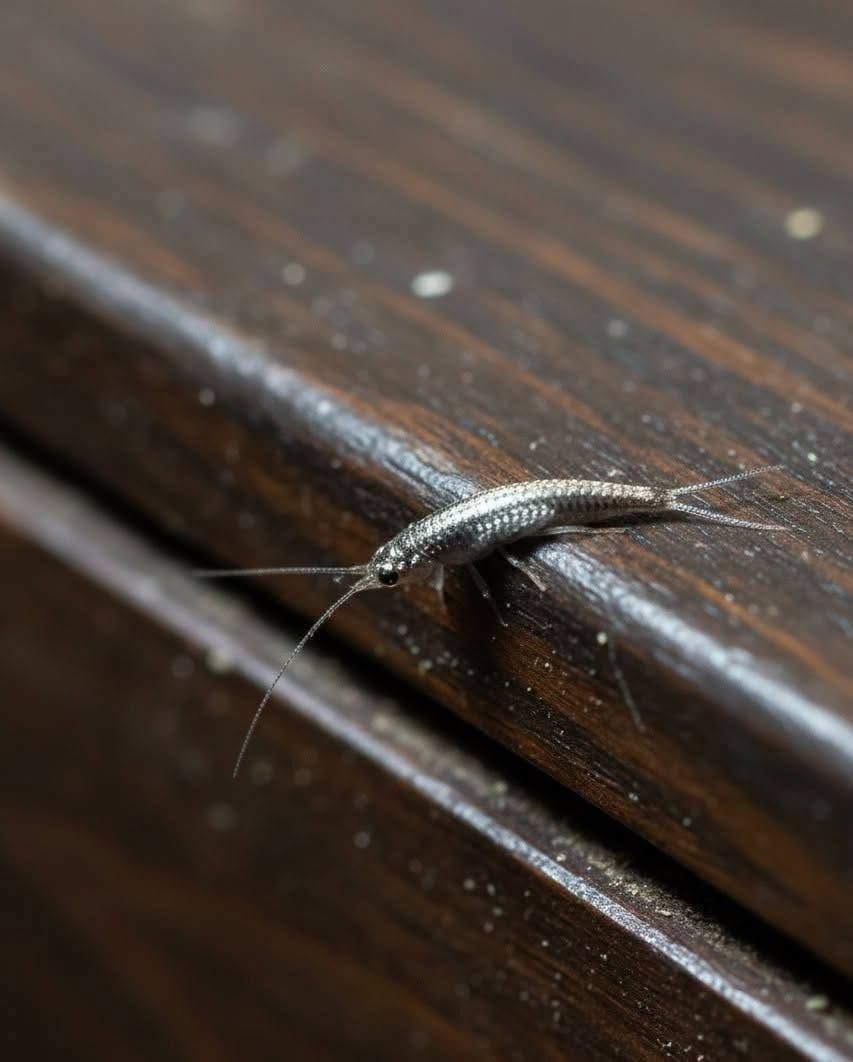
A viral Facebook post shows a tiny, silver-gray creature with a long, tapered body and delicate antennae. The person sharing the photograph claims that her sister found one in a cupboard, was bitten, and noticed more appearing around the neighborhood. But what exactly is this mysterious insect, and is it dangerous?
Imagine opening a cupboard one evening and spotting something moving quickly along the edge of a wooden shelf.
At first, it looks like a tiny piece of silver thread.
Then it moves.
Its body glistens under the light, and its long, delicate appendages make it look almost prehistoric.
Before you can get a closer look, it disappears into a narrow crack.
Naturally, you wonder what you’ve just seen.
A viral social media photograph has prompted similar questions.
The accompanying caption claims that a woman discovered one of these creatures inside her cupboard and that it bit her. The post also suggests that more of them have recently appeared in the surrounding neighborhood.
The insect in the photograph resembles a silverfish, a small, wingless insect commonly found in homes.
Although its appearance can be unsettling, silverfish are generally considered harmless to humans.
In fact, they are not known for biting people.
So why do these insects appear in cupboards, bathrooms, and bedrooms? What attracts them, and what should you do if you find one?
Here’s everything you need to know.
What Is the Strange Silver Insect in the Photograph?
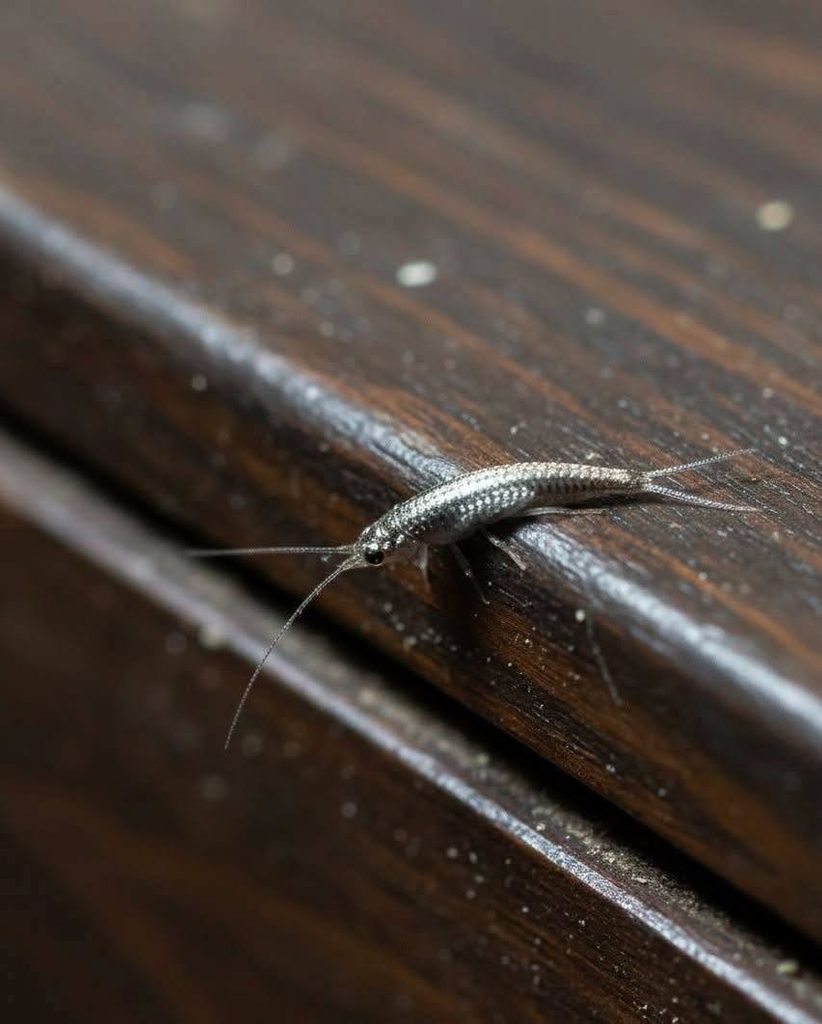
The creature shown in the viral image appears consistent with a silverfish or a closely related insect.
Silverfish belong to the insect order Zygentoma.
One familiar species is Lepisma saccharinum, commonly known as the common silverfish.
These insects are named for their silvery appearance and distinctive movement.
Their bodies are covered with tiny scales that can reflect light, giving them a metallic look.
When they move, their bodies wiggle from side to side in a way that resembles a swimming fish.
That unusual movement is how they earned their common name.
Silverfish are among the most recognizable household insects, although many people have never heard their name.
They are particularly noticeable when they suddenly dart across a bathroom floor or disappear beneath furniture.
What Does a Silverfish Look Like?
Silverfish have several distinctive physical features.
Their bodies are elongated, flattened, and tapered toward the rear.
They do not have wings.
They typically have long antennae at the front and three slender appendages extending from the back of the abdomen.
Their coloration ranges from silvery gray to darker gray or brownish tones, depending on the species.
Adult common silverfish are usually around 12–19 millimeters long, excluding their antennae and rear appendages.
Other related household species may be larger.
How to Recognize One
Look for these characteristics:
- A narrow, elongated body.
- A shiny or scaly appearance.
- Two long antennae.
- Three tail-like appendages.
- Six legs.
- Quick, darting movements.
- A preference for dark, sheltered spaces.
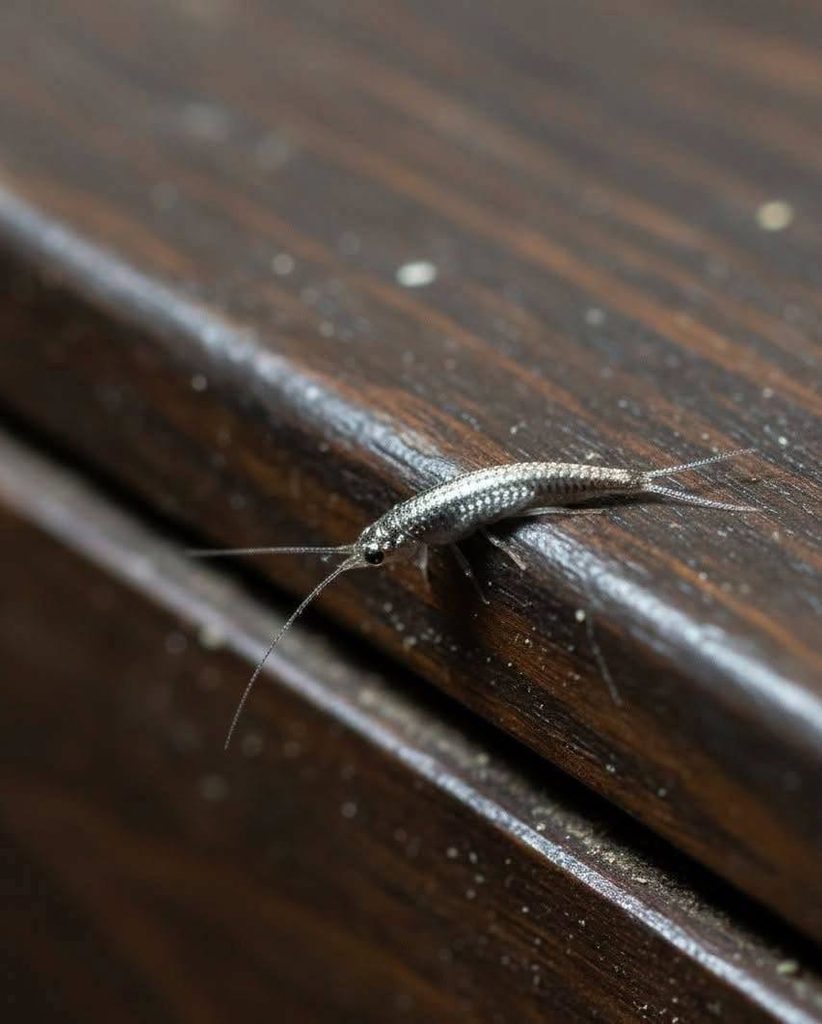
The viral photograph shows several of these characteristics.
However, identifying an exact species from a single image can be difficult.
Some closely related insects, including firebrats and long-tailed silverfish, can look similar.
Do Silverfish Really Bite Humans?
This is the most important question raised by the viral post.
Silverfish are not known to bite humans, and they are not considered medically dangerous household pests.
Their mouthparts are adapted for feeding on materials such as starches, carbohydrates, and certain organic substances.
They do not feed on human blood.
They do not sting.
They are not known to transmit diseases to people through biting.
If someone experiences a painful bite or develops a skin reaction after encountering an insect resembling a silverfish, another cause may be responsible.
Possible explanations include a different insect, skin irritation, or an unrelated condition.
The claim that the insect in the viral photograph bit someone cannot be confirmed from the screenshot.
If a bite or skin reaction causes significant swelling, increasing pain, spreading redness, or other concerning symptoms, medical evaluation is appropriate.
Why Do Silverfish Look So Frightening?
Silverfish have a distinctive appearance that can make them seem more threatening than they are.
Their long antennae, shiny bodies, and rapid movements may surprise someone who encounters them unexpectedly.
They also tend to appear in places where people do not expect to see insects.
A silverfish might emerge from beneath a bathroom cabinet, crawl along a bookshelf, or dart across the floor late at night.
Because they move quickly and hide in narrow spaces, they can be difficult to examine closely.
Their prehistoric appearance adds to the mystery.
However, unusual appearance does not necessarily mean danger.
Silverfish are primarily nuisance pests, not aggressive insects.
Why Are Silverfish Appearing Inside Homes?
Silverfish enter or establish themselves in homes because indoor environments can provide food, shelter, and suitable conditions.
They often prefer dark, protected spaces.
Many species thrive in humid environments, although some related species can tolerate drier conditions.
Homes can provide numerous hiding places.
These include:
- Cupboards.
- Bathrooms.
- Kitchens.
- Basements.
- Laundry rooms.
- Storage areas.
- Closets.
- Bookshelves.
- Cracks around baseboards.
- Spaces beneath appliances.
Silverfish may also be introduced through cardboard boxes, stored materials, or other belongings.
Seeing one does not necessarily mean a home is dirty.
Even well-maintained houses can occasionally contain silverfish.
1. Moisture Can Attract Silverfish
Humidity is one of the most important environmental factors for many silverfish species.
Bathrooms and basements are common locations because they may provide moisture and shelter.
Leaks beneath sinks, condensation around pipes, and poorly ventilated areas can create favorable conditions.
If silverfish repeatedly appear in a particular room, checking for excess moisture may help.
Signs of a Moisture Problem
You may notice:
- Condensation on surfaces.
- Damp walls.
- Musty odors.
- Leaking pipes.
- Wet areas beneath sinks.
- Poor ventilation.
Correcting these problems can make the environment less favorable for moisture-loving pests.
However, not all silverfish species require the same humidity levels.
2. Cardboard Boxes Provide Hiding Places
Cardboard boxes are common in storage rooms, closets, and garages.
They can offer shelter and may contain materials that silverfish can consume.
Some silverfish feed on substances associated with paper and adhesives.
A cluttered storage area with old boxes can provide many protected spaces.
If you frequently notice silverfish near stored belongings, consider inspecting those areas.
Replacing unnecessary cardboard storage with suitable sealed containers may help reduce hiding places.
3. Books and Paper Can Attract Them
Silverfish are well known for their association with paper products.
They may feed on starches and certain adhesives found in books, wallpaper, and other materials.
In some circumstances, they can damage stored documents.
This is particularly concerning for valuable books, photographs, and archival materials.
Possible Signs of Damage
Look for:
- Irregular surface grazing.
- Small holes in paper.
- Damage to book bindings.
- Yellowish stains or other unexplained marks.
- Insects hiding between stored materials.
Not every damaged book has been affected by silverfish.
Other insects and environmental conditions can produce similar damage.
4. Cupboards Can Offer Food and Shelter
The viral post specifically mentions a cupboard.
This is a plausible place to encounter a silverfish.
Cupboards can contain food residue, paper packaging, adhesives, and dark hiding places.
Kitchen cupboards may also be located near plumbing, creating additional moisture.
Silverfish can feed on a variety of starchy substances.
They may be attracted to materials such as:
- Flour.
- Cereals.
- Paper packaging.
- Certain adhesives.
- Food crumbs.
Finding silverfish in a cupboard does not automatically mean that all stored food is contaminated.
However, food packages should be inspected if insect activity is suspected.
5. Silverfish Are Often Active at Night
Silverfish are generally nocturnal.
They tend to avoid light and remain hidden during the day.
This is why people often discover them unexpectedly when turning on a bathroom or kitchen light.
The insect may suddenly run toward a crack or dark corner.
Its quick movement can make it seem more alarming.
But the behavior is usually an attempt to escape disturbance rather than an attempt to attack.
6. They Can Hide in Very Small Spaces
Silverfish have flattened bodies that allow them to move into narrow gaps.
They may hide behind baseboards, beneath cabinets, around pipes, or inside wall voids.
This makes them difficult to eliminate simply by removing the insects you can see.
If several are present, others may remain hidden.
Reducing favorable conditions and addressing entry points can help manage recurring activity.
7. They Can Survive for Years
Silverfish have relatively long lifespans compared with many small household insects.
Under suitable conditions, some species may survive for several years.
Their development can also be slow.
This means a population may persist in a building for a considerable period if conditions remain favorable.
A single sighting does not prove that an infestation exists.
However, repeated sightings over time may indicate an established population.
8. Silverfish Do Not Have Wings
Unlike many other household insects, silverfish are wingless.
They cannot fly.
Instead, they rely on their legs to move rapidly across surfaces.
Their flattened bodies and flexible movements help them navigate narrow spaces.
If you see a small silver insect flying around your home, it is unlikely to be a silverfish.
9. They Are Not Bedbugs
Silverfish and bedbugs are very different insects.
Bedbugs are blood-feeding insects that can bite humans.
Silverfish do not feed on blood.
Their appearance also differs significantly.
| Feature | Silverfish | Bedbugs |
|---|---|---|
| Body shape | Long and tapered | Broad and oval |
| Color | Often silver-gray | Usually reddish brown |
| Wings | None | No functional wings |
| Main food | Starches and organic materials | Blood |
| Human bites | Not known to bite | Can bite |
| Common hiding places | Damp areas, cracks, storage | Near sleeping areas |
Correct identification is essential because the appropriate pest-control approach depends on the insect involved.
10. They Are Not Usually a Direct Health Threat
Silverfish are not generally considered a direct threat to human health.
They are not venomous.
They do not sting.
They are not known to spread human diseases in the way some other pests can.
Their main significance is the potential damage they can cause to stored materials and the discomfort associated with having insects inside the home.
This distinction matters because viral posts sometimes exaggerate the danger of unfamiliar creatures.
A silverfish may look unpleasant, but it is not generally dangerous.
Can Silverfish Damage Your Belongings?
Yes.
Although silverfish do not normally harm people, they can damage certain household materials.
They are attracted to carbohydrates and may consume starch-rich substances.
Potentially vulnerable items include:
- Books.
- Documents.
- Wallpaper.
- Paper packaging.
- Certain fabrics.
- Stored food products.
- Materials containing starch-based adhesives.
Damage is often gradual.
A few isolated insects may cause little noticeable harm.
However, a larger population can become a nuisance, particularly in storage areas.
Can Silverfish Damage Clothes?
Some silverfish may feed on substances associated with fabrics.
They can be attracted to starches, food stains, or other organic residues on clothing.
Certain textiles may be damaged under suitable conditions.
However, silverfish are not the only insects that can damage fabrics.
Clothes moths and carpet beetles are other common possibilities.
If clothing develops unexplained holes, correct identification of the pest is important before choosing treatment.
Why Are More Silverfish Appearing in the Neighborhood?
The viral caption suggests that increasing numbers of these insects have been noticed around the neighborhood.
There is not enough information to verify that claim.
However, local environmental conditions can influence insect activity.
Changes in temperature, humidity, rainfall, building conditions, and available shelter may affect where insects are observed.
Sometimes increased sightings simply mean that more people have begun noticing and discussing the same species.
A few social media reports do not necessarily establish a widespread infestation.
Reliable local pest monitoring would be needed to confirm a broader increase.
How to Get Rid of Silverfish in Your Home
If silverfish are appearing regularly, several practical measures may help reduce their numbers.
The most effective approach generally involves addressing the conditions that allow them to thrive.
Step 1: Reduce Excess Humidity
For moisture-loving silverfish species, humidity control can be especially helpful.
Repair leaking pipes and faucets.
Improve ventilation in bathrooms and laundry rooms.
Use exhaust fans where appropriate.
Consider a dehumidifier in persistently damp spaces.
Reducing moisture may make your home less attractive to certain silverfish species.
Step 2: Inspect Cupboards and Storage Areas
Check dark corners, shelves, and spaces beneath cabinets.
Look for insects, shed skins, and damage to stored materials.
Remove unnecessary clutter.
Pay particular attention to areas where paper products and cardboard boxes have been stored for long periods.
Step 3: Store Food Properly
Keep dry food products in suitable sealed containers.
Inspect opened packages if insects have been seen nearby.
Clean up crumbs and spills.
Discard food that is clearly contaminated by pests.
Good food storage practices help reduce access to potential food sources.
Step 4: Seal Cracks and Gaps
Silverfish can hide in small openings.
Inspect gaps around:
- Baseboards.
- Cabinets.
- Pipes.
- Wall joints.
- Door frames.
- Other structural openings.
Appropriate sealing can reduce hiding places and movement between areas.
Step 5: Vacuum Regularly
Vacuuming can remove visible insects, shed skins, food debris, and dust.
Focus on cracks, corners, and areas behind furniture.
Dispose of vacuum contents appropriately after cleaning areas with pest activity.
Vacuuming alone may not eliminate an established population, but it can be a useful part of a broader management plan.
Step 6: Protect Books and Important Documents
Store valuable papers in clean, dry conditions.
Avoid prolonged exposure to excess humidity.
Use suitable protective containers when necessary.
Inspect stored collections periodically.
This can help protect materials from silverfish and other environmental damage.
Step 7: Use Monitoring Traps
Sticky traps may help identify areas where silverfish are active.
They can also help determine whether the problem is isolated or more widespread.
Place traps in locations where insects have been observed, following product instructions.
Keep traps away from children and pets when appropriate.
Traps are primarily useful for monitoring and capturing some insects.
They may not resolve the underlying cause.
Step 8: Consider Professional Pest Control
If silverfish continue appearing despite cleaning, moisture control, and sealing efforts, a licensed pest-control professional may be helpful.
A professional can identify the species and assess the extent of activity.
This matters because different silverfish species may respond differently to environmental conditions.
Professional treatment can be especially useful when insects are established inside wall voids or difficult-to-access spaces.
Do Natural Remedies Work Against Silverfish?
The internet contains many suggestions for repelling silverfish.
These include essential oils, vinegar, citrus peels, and various household powders.
However, evidence supporting many of these remedies is limited.
A substance that appears to repel an insect temporarily may not eliminate an established infestation.
Some household mixtures can also damage surfaces or create unnecessary risks for children and pets.
It is best to prioritize methods with clearer practical benefits, such as moisture control, cleaning, sealing, monitoring, and professional treatment when needed.
Never mix household chemicals in an attempt to eliminate pests.
Does Vinegar Kill Silverfish?
Vinegar is often promoted as a universal household pest solution.
However, there is insufficient evidence that ordinary vinegar cleaning reliably eliminates established silverfish populations.
Cleaning surfaces may remove food residues, but that is different from killing insects or preventing their return.
Vinegar may also be unsuitable for certain surfaces.
Use cleaning products according to their instructions rather than relying on unverified pest-control claims.
Does Baking Soda Get Rid of Silverfish?
Baking soda is another commonly suggested home remedy.
However, claims that it reliably kills silverfish are not well supported by strong evidence.
Simply scattering baking soda around a home is unlikely to address the underlying conditions that allow silverfish to survive.
It is better to focus on identifying the insect, reducing hiding places, and correcting environmental problems.
Can Silverfish Crawl Into Your Bed?
Silverfish can move through different parts of a home, including bedrooms.
They may occasionally be found near beds, furniture, or clothing.
However, they are not parasites that seek human blood.
They do not typically live on people.
Finding one in a bedroom does not mean it has been feeding on you.
If you are waking with unexplained bite-like marks, other causes should be considered.
A healthcare professional can assess concerning skin symptoms, while a qualified pest professional can help identify insects in the home.
Can Silverfish Get Into Your Hair or Ears?
Silverfish do not normally seek out human hair, skin, or ears.
They are not adapted to live on the human body.
Their primary interests are shelter and suitable food materials.
Viral claims suggesting that silverfish commonly enter people’s ears or infest their hair are misleading.
If you experience symptoms involving your ear or scalp, seek appropriate medical advice rather than assuming a silverfish is responsible.
Do Silverfish Lay Eggs Inside Homes?
Yes.
Silverfish reproduce by laying eggs in protected locations.
Depending on the species and conditions, eggs may be deposited in cracks, crevices, or other sheltered spaces.
Young silverfish resemble smaller versions of adults.
They gradually develop as they molt.
Because eggs and young insects may remain hidden, repeated sightings can continue even after visible adults are removed.
This is another reason that addressing environmental conditions is important.
How Do You Know if You Have a Silverfish Infestation?
A single silverfish does not necessarily indicate an infestation.
However, repeated sightings may justify a closer inspection.
Possible signs include:
- Seeing silverfish regularly.
- Finding them in multiple rooms.
- Discovering shed skins.
- Noticing unexplained damage to paper or stored materials.
- Capturing several insects in monitoring traps.
These signs should be interpreted together.
Other insects can produce similar damage.
Correct identification remains important.
What Should You Do if You Find One in Your Cupboard?
If you discover an insect resembling the one in the viral photograph, avoid panicking.
You can begin with a few simple steps.
First, observe the insect without touching it unnecessarily.
If possible, take a clear photograph for identification.
Next, inspect the surrounding area for additional insects or damage.
Check for moisture, leaks, food residue, and clutter.
Clean the cupboard and ensure food is properly stored.
If the insect appears to be a silverfish, there is generally no reason to fear a bite.
If you are uncertain about the identification or notice repeated activity, consider professional advice.
What If You Think an Insect Bit You?
Although silverfish are not known to bite humans, a person may experience a skin reaction after encountering an unidentified insect.
Do not assume the insect caused the reaction simply because it was nearby.
Other insects, skin irritation, allergies, and unrelated conditions can produce similar symptoms.
Wash the affected area gently if the skin has been irritated or broken.
Seek medical attention if you experience:
- Significant swelling.
- Severe pain.
- Spreading redness.
- Signs of infection.
- Persistent or worsening symptoms.
Difficulty breathing, swelling of the tongue or throat, or other signs of a severe allergic reaction require emergency medical care.
Silverfish vs. Firebrats: How Are They Different?
Firebrats are close relatives of silverfish.
They belong to the same insect order and have similar body shapes.
However, firebrats often have a more mottled appearance.
They are also associated with warmer environments.
For example, they may be found near heating equipment or other warm areas.
Because the two groups resemble each other, photographs alone may not always provide enough information for confident identification.
Both are generally considered nuisance pests rather than biting insects.
Why Silverfish Have Survived for So Long
Silverfish belong to an ancient lineage of wingless insects.
Their basic body structure has existed for a very long time in evolutionary history.
This is one reason people sometimes describe them as prehistoric-looking.
Their survival is supported by several useful adaptations.
They can hide in narrow spaces.
They are often active when predators and disturbances are less noticeable.
They can consume a variety of materials.
And some species can survive under relatively challenging conditions.
However, calling them ancient does not mean that the exact modern species existed unchanged for hundreds of millions of years.
Evolution continues across all living lineages.
Are Silverfish Useful in Nature?
Although silverfish can be household pests, related insects also play ecological roles.
In natural environments, they may help break down organic materials.
They can feed on decaying matter and other available food sources.
They may also serve as prey for larger organisms.
Their presence in nature is not inherently harmful.
Problems arise mainly when they enter buildings and damage stored belongings.
Common Myths About Silverfish
Myth 1: Silverfish Bite People
False. Silverfish are not known to bite humans.
Myth 2: Silverfish Are Poisonous
False. They are not considered poisonous or venomous household insects.
Myth 3: Seeing One Means Your House Is Dirty
False. Silverfish can appear in clean homes.
Myth 4: Silverfish Are Baby Centipedes
False. Silverfish are insects with six legs, while centipedes have many pairs of legs.
Myth 5: Silverfish Always Mean There Is a Serious Infestation
False. A single sighting does not establish an infestation.
Myth 6: All Silverfish Need Very Damp Conditions
False. Different species have different environmental preferences.
Myth 7: Vinegar and Baking Soda Always Eliminate Them
False. These are not proven universal solutions for established infestations.
Myth 8: Silverfish Are Dangerous Because They Look Strange
False. Their appearance is unusual, but they are generally harmless to humans.
Frequently Asked Questions
What Is the Silver Insect With Long Antennae?
It may be a silverfish or a related insect. A clear photograph can help with identification.
Can Silverfish Bite Humans?
Silverfish are not known to bite people.
Are Silverfish Dangerous?
They are generally not dangerous to humans, although they may damage paper, fabrics, and other household materials.
Why Are Silverfish in My Cupboard?
Cupboards may provide food sources, shelter, and sometimes moisture.
Do Silverfish Come From Drains?
They may be found near drains because bathrooms and kitchens can provide favorable conditions. However, they do not necessarily originate inside plumbing.
Can Silverfish Live in Bedrooms?
Yes. They can occur in bedrooms, closets, and storage areas.
Do Silverfish Mean I Have Mold?
Not necessarily. Moisture may favor some species, but silverfish do not automatically prove that mold is present.
How Can I Get Rid of Silverfish Naturally?
Reducing moisture, cleaning storage areas, removing clutter, sealing gaps, and using monitoring traps may help.
Do Silverfish Fly?
No. They are wingless insects.
How Long Do Silverfish Live?
Some species can survive for several years under favorable conditions.
Can Silverfish Damage Books?
Yes. They may damage paper, adhesives, and related materials.
Should I Call Pest Control for One Silverfish?
Usually, one sighting alone does not require professional treatment. Repeated activity or damage may justify further investigation.
Final Thoughts: The Truth Behind the Strange Insect in the Cupboard
The viral photograph shows a tiny, silver-gray creature that resembles a silverfish.
Its unusual appearance can make it seem frightening.
The accompanying story claims that the insect bit someone and that more have recently appeared in the neighborhood.
However, those claims are not independently verified.
More importantly, silverfish are not known to bite humans.
They are generally harmless to people, although they can become nuisance pests and damage certain household materials.
If you find one inside your home, there is usually no need to panic.
Inspect the area, look for moisture problems, reduce clutter, and monitor for additional activity.
If insects continue appearing, correct identification and appropriate pest management can help.
The biggest lesson is that a strange-looking insect is not necessarily a dangerous one.
Sometimes, the creature that looks the most alarming is simply a small household pest searching for shelter and food.
And in the case of silverfish, understanding what they are is far more useful than fearing what they might do.
Have you ever found one of these strange silver insects in your bathroom, kitchen, or cupboard? Did you know it was called a silverfish? Share your experience in the comments!