Have you noticed a small, round lump on your wrist or hand? It might appear suddenly, grow slowly, or seem to change size for no obvious reason. One common explanation is a ganglion cyst—a usually harmless, fluid-filled swelling that develops near a joint or tendon. Here’s what causes these lumps, how to recognize them, and when they need medical attention.
Imagine looking down at your wrist and noticing something that wasn’t there before.
A small bump.
It’s round, slightly raised, and located near the joint.
At first, you might think it’s an insect bite or a temporary swelling.
But days pass, and the lump remains.
You may notice it more when you bend your wrist or use your hand.
Perhaps it doesn’t hurt at all.
Or maybe you experience discomfort when typing, lifting objects, or performing everyday activities.
Naturally, you begin to wonder:
What is this lump, and should I be worried?
A viral Facebook post has attracted attention with photographs of rounded swellings near the wrist and hand.
The caption suggests that such a lump may appear because of something you do every day.
While that headline sounds alarming, the explanation is often less frightening.
One common cause of a wrist lump is a ganglion cyst.
These cysts are generally benign and can develop near joints and tendons, particularly around the wrist.
However, not every wrist lump is a ganglion cyst, and daily activities do not necessarily cause one.
Understanding the possible causes can help you decide when to seek medical advice and which treatments may be appropriate.
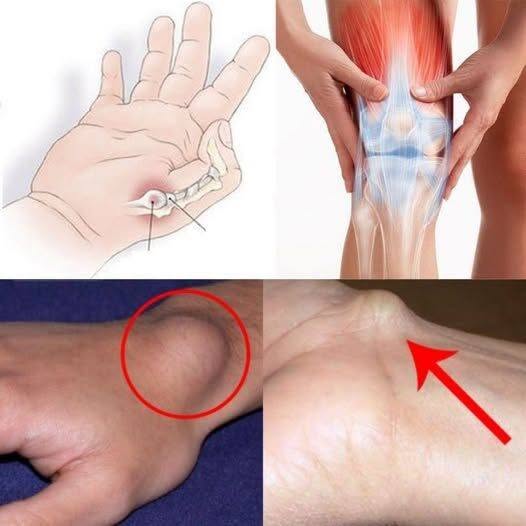
What Is a Ganglion Cyst?
A ganglion cyst is a noncancerous, fluid-filled lump that usually develops near a joint or tendon sheath.
It contains a thick, jelly-like fluid similar to the fluid found in joints.
Ganglion cysts are among the most common causes of lumps around the wrist and hand.
They can vary considerably in size.
Some are barely noticeable.
Others become large enough to form an obvious rounded bump beneath the skin.
They may feel firm or somewhat rubbery.
Although the name sounds serious, most ganglion cysts are not dangerous.
Some cause no symptoms at all.
Others may create discomfort, interfere with movement, or press on nearby nerves.
The appearance of a lump alone, however, cannot confirm that it is a ganglion cyst.
A healthcare professional may need to examine it.
Where Do Ganglion Cysts Usually Appear?
Ganglion cysts can develop in several locations, but certain areas are particularly common.
1. The Back of the Wrist
This is one of the most frequent locations.
The cyst may become more noticeable when the wrist is bent forward.
It often appears as a smooth, rounded swelling.
2. The Palm Side of the Wrist
Ganglion cysts can also develop on the underside of the wrist.
These are sometimes called volar wrist ganglion cysts.
Because important blood vessels and nerves pass through this area, treatment requires particular care.
3. The Base of the Fingers
Some cysts develop near the tendon sheaths at the base of the fingers.
They may feel like small, firm nodules.
4. Near Finger Joints
Small cysts can appear near the joints closest to the fingernails.
These are often called digital mucous cysts and may be associated with joint degeneration.
5. The Foot or Ankle
Although the wrist is a common location, ganglion cysts can develop near other joints and tendons.
What Causes a Ganglion Cyst?
The exact cause of ganglion cysts is not always known.
They are associated with joints and tendon sheaths, but the biological processes leading to their formation are not completely understood.
A ganglion cyst may develop when fluid collects within a small sac connected to nearby joint or tendon structures.
Several factors may be associated with their development.
However, association does not necessarily mean direct causation.
Repetitive Wrist Movements
Typing, writing, using tools, exercising, and other activities involve repeated wrist movements.
Some people notice that an existing ganglion cyst becomes more prominent or uncomfortable after activity.
However, scientific evidence does not establish that ordinary repetitive activities directly cause most ganglion cysts.
Previous Joint or Tendon Injury
A history of injury may be associated with cyst formation in some cases.
Not everyone with a ganglion cyst has experienced an injury.
Joint Degeneration
Certain cysts, particularly those near finger joints, may be associated with osteoarthritis.
Individual Susceptibility
Some people develop ganglion cysts without any identifiable trigger.
This means you can develop one even if you do not perform repetitive hand movements or strenuous physical activities.
Can Something You Do Every Day Cause a Wrist Lump?
This is the question raised by the viral post.
The headline suggests that a common daily habit may be responsible.
But the answer is more complicated.
Activities such as typing, using a smartphone, cleaning, lifting, and exercising involve repetitive movement.
These activities may aggravate symptoms from an existing wrist condition.
However, they have not been proven to be the direct cause of most ganglion cysts.
It would be misleading to claim that typing, scrolling on your phone, or using your hands every day inevitably causes ganglion cysts.
In many cases, the exact cause remains unknown.
If a lump becomes more painful during a particular activity, reducing that activity temporarily may improve comfort.
But that does not establish why the lump originally formed.
15 Important Facts About Ganglion Cysts and Wrist Lumps
1. Ganglion Cysts Are Usually Benign
The word cyst can sound alarming.
However, ganglion cysts are generally noncancerous.
They do not behave like malignant tumors.
Many remain stable or disappear without treatment.
Still, a new lump should not automatically be assumed to be harmless.
Other conditions can produce similar swellings.
A medical examination can help determine the cause.
2. They Can Appear Suddenly
Some people notice a wrist lump almost overnight.
Others discover one that has developed gradually.
A ganglion cyst may become visible when it reaches a certain size.
It may also appear more noticeable depending on wrist position.
Sudden appearance does not necessarily mean the cyst formed entirely within a few hours.
The swelling may have been present but difficult to see.
3. Their Size Can Change
One interesting characteristic of ganglion cysts is that their size may fluctuate.
A cyst may become larger and then smaller.
Some seem to disappear temporarily before returning.
Changes in activity and joint position may influence how noticeable a cyst becomes.
However, a rapidly enlarging lump should be assessed rather than automatically attributed to a ganglion cyst.
4. Some Ganglion Cysts Cause No Pain
Many people discover a ganglion cyst because they notice its appearance, not because it hurts.
A painless lump may remain unchanged for a long time.
If a clinician confirms that the lump is a ganglion cyst and it causes no problems, observation may be appropriate.
Not every cyst needs to be removed.
5. Others Can Cause Wrist Pain
Some ganglion cysts cause aching or discomfort.
Pain may occur during activities that place pressure on the affected joint.
For example:
- Pushing yourself up from a chair.
- Doing push-ups.
- Lifting heavy objects.
- Bending the wrist backward.
- Carrying bags.
- Performing certain repetitive tasks.
The severity varies.
Some people experience mild discomfort, while others find that the cyst interferes with daily activities.
6. A Ganglion Cyst Can Press on a Nerve
If a cyst is located near a nerve, it may cause symptoms related to pressure.
These can include:
- Tingling.
- Numbness.
- Burning sensations.
- Weakness.
- Discomfort extending into nearby areas.
However, these symptoms can also result from conditions such as carpal tunnel syndrome or other nerve problems.
Persistent numbness or weakness should be evaluated by a healthcare professional.
7. A Wrist Lump Isn’t Always a Ganglion Cyst
Several conditions can resemble a ganglion cyst.
Possible alternatives include:
- Lipoma, a benign fatty lump.
- Giant cell tumor of the tendon sheath, usually a benign localized growth.
- Bone prominence.
- Inflammatory swelling.
- Joint-related changes.
- Vascular abnormalities.
- Other soft-tissue masses.
Rarely, a lump may represent a more serious condition.
This is why the location and appearance of a swelling cannot establish the diagnosis on their own.
8. Ganglion Cysts Are More Common in Certain Groups
Ganglion cysts can occur at different ages.
They are commonly diagnosed in young and middle-aged adults.
Some types are more frequent in women.
However, anyone can develop one.
Children and older adults may also experience ganglion cysts.
Age and sex alone cannot determine whether a wrist lump is a cyst.
9. The Lump May Feel Firm
Ganglion cysts are filled with thick fluid.
Because of this, they may feel firmer than expected.
Some feel smooth and slightly movable.
Others feel more fixed because they are connected to deeper structures.
A firm lump is not automatically dangerous.
However, a hard, irregular, rapidly growing, or fixed mass deserves medical evaluation.
10. A Ganglion Cyst May Disappear Without Treatment
Some ganglion cysts resolve spontaneously.
This is one reason observation is often considered when the diagnosis is clear and symptoms are minimal.
However, not every cyst disappears.
Some persist for years.
Others fluctuate in size.
Even a cyst that disappears can sometimes return.
11. Rest May Reduce Discomfort
If an existing cyst becomes painful during certain activities, temporarily modifying those movements may help.
For example, reducing repetitive wrist loading may decrease irritation.
Some people benefit from short-term support or splinting under professional guidance.
However, prolonged immobilization is not always necessary and may contribute to stiffness.
Activity changes should be individualized.
12. Hitting the Cyst Is Dangerous
One old-fashioned home remedy involves striking a ganglion cyst with a heavy object.
This practice is sometimes associated with the nickname “Bible cyst.”
The idea was to rupture the cyst by applying sudden force.
Do not attempt this.
Hitting a wrist lump can injure surrounding tissues, nerves, blood vessels, and joints.
It may also fail to treat the underlying problem.
Modern medical care offers safer approaches.
13. You Should Never Try to Pop It With a Needle
Another dangerous home treatment involves puncturing the lump with a needle.
This can introduce bacteria and cause infection.
It may also injure nearby structures.
The palm side of the wrist contains important blood vessels and nerves.
Attempting to drain a lump without knowing what it is can be particularly hazardous.
Never puncture, cut, or squeeze an unidentified wrist lump.
14. Some Cysts Can Be Drained by a Doctor
In certain cases, a clinician may recommend aspiration.
This involves removing fluid from the cyst with a needle under appropriate medical conditions.
Aspiration can reduce the size of the lump.
However, the cyst may return because its connection to the underlying joint or tendon sheath remains.
Aspiration is not suitable for every location or every patient.
15. Surgery Is Sometimes Necessary
Surgical removal may be considered when a ganglion cyst causes persistent pain, limits function, compresses nearby structures, or repeatedly returns.
Surgery generally involves removing the cyst and its connection to the underlying tissue.
However, surgery has risks.
These can include infection, stiffness, scar sensitivity, nerve injury, and recurrence.
The decision should be made after discussing benefits and risks with a qualified specialist.
How Do Doctors Diagnose a Ganglion Cyst?
Diagnosis often begins with a physical examination.
A clinician may ask:
- When did the lump first appear?
- Has its size changed?
- Is it painful?
- Does movement make symptoms worse?
- Have you experienced numbness or weakness?
- Have you had a previous injury?
- Have you noticed other lumps?
The clinician may examine the lump’s location, texture, mobility, and relationship to the wrist joint.
Additional testing is sometimes necessary.
Ultrasound
Ultrasound can help determine whether a lump is filled with fluid or consists of solid tissue.
It may also help identify nearby blood vessels.
This can be particularly useful when the diagnosis is uncertain.
MRI
Magnetic resonance imaging may be recommended in selected cases.
It can provide detailed images of soft tissues and help assess deeper structures.
MRI is not required for every ganglion cyst.
X-Ray
An X-ray does not usually show a ganglion cyst clearly.
However, it may help evaluate bone or joint abnormalities that could explain symptoms.
Ganglion Cyst vs. Lipoma: What’s the Difference?
Both conditions can produce a lump beneath the skin.
However, they involve different tissues.
| Feature | Ganglion cyst | Lipoma |
|---|---|---|
| Main composition | Thick, jelly-like fluid | Fatty tissue |
| Common location | Near joints or tendon sheaths | Various body areas |
| Typical feel | Firm or rubbery | Often soft and movable |
| Pain | Sometimes painful | Usually painless |
| Size changes | May fluctuate | Often grows slowly |
| Treatment | Observation, aspiration, or surgery | Observation or removal when indicated |
These are general patterns.
A clinician may need imaging or other evaluation to distinguish them.
Can a Ganglion Cyst Turn Into Cancer?
A true ganglion cyst is a benign condition.
It does not normally transform into cancer.
However, the important issue is confirming that the lump actually is a ganglion cyst.
Some other soft-tissue masses can resemble benign cysts.
A rapidly growing, unusually hard, or otherwise concerning lump should be assessed.
Do not rely on internet photographs to diagnose an unexplained swelling.
What Does a Ganglion Cyst Feel Like?
People describe ganglion cysts in different ways.
Some say the lump feels like a small rubber ball.
Others describe a firm bump attached to the wrist.
It may be smooth and rounded.
The skin over the cyst usually appears normal.
However, the exact appearance and texture can vary.
If the skin becomes red, hot, or increasingly painful, seek medical assessment because infection or another condition may be present.
Can a Ganglion Cyst Cause Carpal Tunnel Symptoms?
A ganglion cyst located near certain nerves can sometimes contribute to nerve compression.
If a cyst affects the median nerve in the wrist, symptoms may resemble carpal tunnel syndrome.
These can include numbness, tingling, and weakness in particular fingers.
However, most ganglion cysts do not cause carpal tunnel syndrome.
A healthcare professional can evaluate whether symptoms are related to the cyst or another condition.
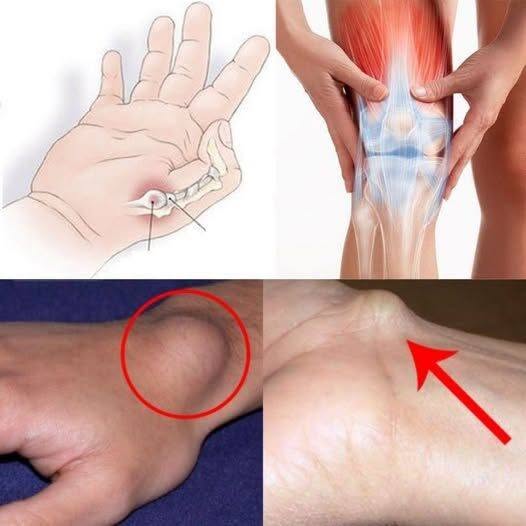
Does Using Your Phone Cause Ganglion Cysts?
Smartphone use involves repeated finger and wrist movements.
Some people experience discomfort after prolonged phone use.
However, there is insufficient evidence to conclude that smartphone use directly causes ganglion cysts.
If you already have wrist discomfort, reducing prolonged awkward positioning may help.
Taking breaks and adjusting your grip can also improve comfort.
But these measures should not be presented as guaranteed ways to prevent cyst formation.
Can Typing All Day Cause a Wrist Lump?
Typing can contribute to certain types of hand or wrist discomfort.
However, the relationship between keyboard use and ganglion cyst development is not clearly established.
A person who types frequently may develop a cyst, but that does not prove typing caused it.
If a lump appears, it is more useful to obtain an accurate diagnosis than to assume a particular daily habit is responsible.
Are Ganglion Cysts Related to Arthritis?
Some cysts are associated with joint degeneration.
Digital mucous cysts near the end joints of fingers are often linked with osteoarthritis.
However, many wrist ganglion cysts occur in people without significant arthritis.
A ganglion cyst does not automatically mean you have an arthritic condition.
Can Exercise Make a Ganglion Cyst Worse?
Certain exercises place considerable weight through the wrists.
Examples include:
- Push-ups.
- Planks.
- Handstands.
- Some yoga positions.
- Weightlifting movements.
If you have a painful ganglion cyst, these activities may aggravate symptoms.
You may benefit from modifying hand position, reducing load, or using alternative exercises.
However, exercise does not necessarily cause the cyst to grow.
If pain persists, a clinician or physical therapist can help identify appropriate modifications.
How to Reduce Wrist Discomfort During Everyday Activities
If a healthcare professional has confirmed that your wrist lump is benign, several strategies may help reduce discomfort.
Take Regular Breaks
Avoid remaining in uncomfortable wrist positions for long periods.
Adjust Your Workspace
Keep your wrists in a comfortable position when typing or using a mouse.
Modify Painful Activities
Temporarily reduce movements that consistently aggravate symptoms.
Avoid Excessive Pressure
Do not repeatedly press or massage the lump aggressively.
Consider Professional Guidance
A healthcare professional may recommend a suitable wrist support or specific exercises.
These measures may help manage discomfort but do not guarantee that a cyst will disappear.
Should You Massage a Ganglion Cyst?
Gentle movement around the wrist may be comfortable for some people.
However, forcefully massaging or pressing a cyst is not a proven treatment.
Aggressive manipulation may increase pain or irritate surrounding tissues.
Avoid trying to rupture the cyst manually.
If the lump is painful, seek medical advice rather than attempting to break it apart.
Can Ice Help a Painful Wrist Lump?
Cold packs may provide temporary relief from discomfort associated with some wrist conditions.
If appropriate for you, wrap a cold pack in a cloth and apply it briefly.
Do not place ice directly against the skin.
Cold treatment does not remove the cyst itself.
If swelling is accompanied by redness, warmth, fever, or severe pain, seek medical assessment.
Can a Ganglion Cyst Come Back After Treatment?
Yes.
Recurrence is possible after both aspiration and surgery.
Aspiration often has a higher recurrence rate because the connection between the cyst and the joint may remain.
Surgery generally aims to remove the cyst and its stalk, but recurrence can still occur.
The likelihood varies depending on the cyst’s location, treatment technique, and other factors.
A clinician can explain the expected benefits and recurrence risks of available options.
When Should You See a Doctor About a Wrist Lump?
A new or unexplained lump should be evaluated, particularly if it persists.
Arrange medical assessment if:
- The lump is growing.
- It causes pain.
- Wrist movement becomes difficult.
- You experience numbness or tingling.
- You notice weakness.
- The lump is hard or irregular.
- Its appearance is unusual.
- You are uncertain what caused it.
Seek prompt medical attention if the area becomes very painful, red, hot, or swollen, especially if you also have fever.
Sudden severe pain, major loss of movement, or signs of impaired circulation also require urgent assessment.
Can You Prevent Ganglion Cysts?
There is no proven method that guarantees prevention.
Because the exact causes are not always known, avoiding a particular movement does not necessarily prevent cyst formation.
However, general joint-care habits can help reduce some forms of wrist discomfort.
These include:
- Avoiding prolonged painful positions.
- Taking breaks during repetitive tasks.
- Using appropriate technique during exercise.
- Addressing injuries when they occur.
- Seeking assessment for persistent symptoms.
These habits support comfort and function, even though they have not been proven to prevent every ganglion cyst.
Common Myths About Wrist Ganglion Cysts
Myth 1: Every Wrist Lump Is a Ganglion Cyst
False.
Several conditions can produce similar lumps.
Myth 2: Ganglion Cysts Are Cancerous
False.
True ganglion cysts are benign.
Myth 3: Typing Always Causes Ganglion Cysts
False.
A direct causal relationship has not been established.
Myth 4: You Can Safely Pop a Cyst at Home
False.
Puncturing or striking a lump can cause injury or infection.
Myth 5: Every Ganglion Cyst Needs Surgery
False.
Many can be observed when they cause no significant symptoms.
Myth 6: Once Removed, a Cyst Can Never Return
False.
Recurrence is possible.
Myth 7: A Painless Lump Never Needs Medical Attention
False.
Some painless lumps require evaluation to establish the correct diagnosis.
Frequently Asked Questions
What Is the Lump on the Back of My Wrist?
A ganglion cyst is one common possibility, but other conditions can cause wrist lumps. A medical examination is needed for diagnosis.
Is a Ganglion Cyst Dangerous?
Most are benign and not dangerous, although some can cause pain or nerve-related symptoms.
Can a Ganglion Cyst Disappear on Its Own?
Yes. Some resolve without treatment.
Does Using a Smartphone Cause Ganglion Cysts?
There is no strong evidence that ordinary smartphone use directly causes ganglion cysts.
Can a Ganglion Cyst Be Painful?
Yes. Some cause pain during movement or pressure.
What Happens if I Pop a Ganglion Cyst?
Attempting to rupture or puncture a cyst can cause injury, infection, and other complications. Do not do this at home.
Is Surgery Always Necessary?
No. Observation or other treatments may be appropriate depending on symptoms and diagnosis.
Can a Ganglion Cyst Cause Numbness?
Yes, if it compresses a nearby nerve, although numbness can have other causes.
What Is the Best Treatment?
Treatment depends on the cyst’s location, symptoms, and individual circumstances. Options may include observation, aspiration, or surgery.
How Can I Know if My Wrist Lump Is Serious?
Seek evaluation for a new or unexplained lump, particularly if it grows, becomes painful, feels unusually hard, or causes neurological symptoms.
Final Thoughts: Don’t Ignore a New Lump, but Don’t Panic Either
Discovering a lump on your wrist can be unsettling.
The viral photograph showing rounded swellings near the hand and wrist highlights a common concern.
One possible explanation is a ganglion cyst.
These fluid-filled lumps are generally benign and often develop near joints or tendons.
Some disappear naturally.
Others remain stable for years.
And some cause discomfort that requires treatment.
But the viral suggestion that a wrist lump is necessarily caused by something you do every day is an oversimplification.
Repetitive activities may aggravate an existing wrist problem, but they are not proven to be the direct cause of most ganglion cysts.
The most important step is obtaining an accurate diagnosis.
Never attempt to pop, puncture, or strike an unidentified lump.
If it is growing, painful, or causing numbness or weakness, consult a healthcare professional.
With proper evaluation, most common wrist lumps can be managed safely.
Have you ever noticed a small, round bump on your wrist or hand? Did it disappear on its own, or did you need treatment? Share your experience in the comments!