A simple household cleaning hack is going viral online, promising cleaner, fresher floors with just one extra ingredient added to mop water. But does this surprisingly easy trick actually work?
Keeping floors clean can feel like a never-ending job.
You sweep in the morning, mop in the afternoon, and somehow, by the following day, dust, footprints, and mysterious marks have already returned.
If you have children, pets, or a busy household, you know exactly how frustrating this can be.
That’s why a viral cleaning trick has captured so much attention.
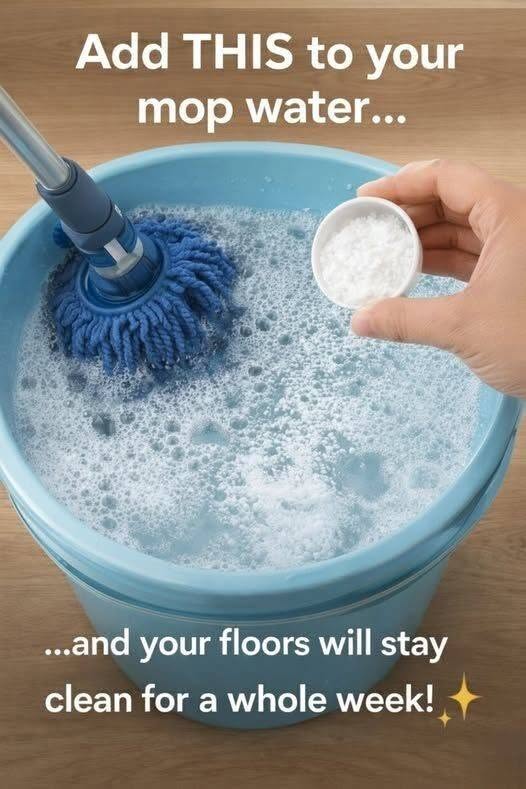
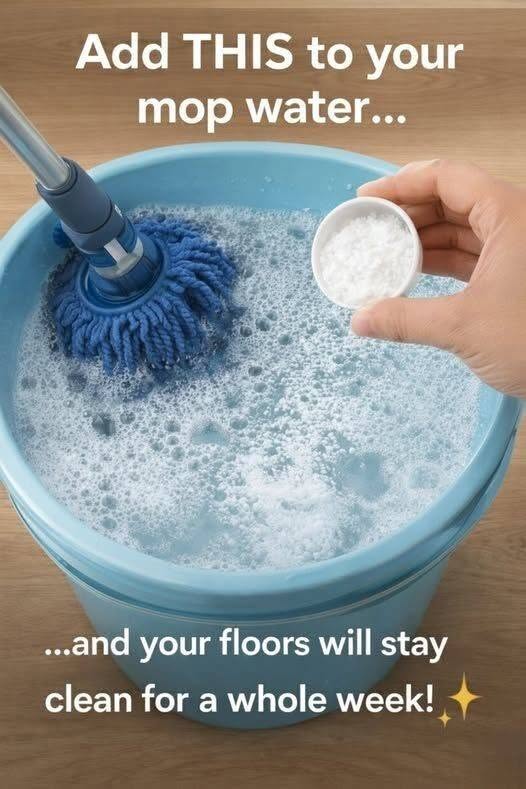
The image shows a blue mop bucket filled with soapy water while someone pours a small cup of white powder into the mixture.
Across the image, a bold message reads:
“Add THIS to your mop water… and your floors will stay clean for a whole week!”
The promise sounds almost magical.
One simple ingredient, one quick mopping session, and sparkling floors for seven days?
But before you reach for your cleaning supplies, there’s something important you should know.
Not every household ingredient is safe for every type of flooring, and no mop-water additive can guarantee that your floors will remain clean for an entire week.
Let’s explore the ingredient people often associate with this trick, why it might help in certain situations, and the safest ways to keep your floors looking beautiful.
What Is the Secret Ingredient in the Viral Mop Water Trick?
The viral photograph shows a small cup containing a white, powdery substance.
However, the image itself does not identify the ingredient.
Several household powders are frequently promoted in online cleaning hacks, including baking soda.
One of the most common suggestions is to add a small amount of baking soda (sodium bicarbonate) to cleaning water.
Baking soda has been used in household cleaning for generations.
It’s inexpensive, widely available, and useful for certain cleaning tasks.
But there’s a difference between using baking soda to remove specific stains and adding it indiscriminately to an entire bucket of mop water.
The latter is not suitable for every floor.
And while baking soda can help with some cleaning problems, it does not create an invisible protective shield that keeps dirt away for seven days.
Why Baking Soda Is So Popular for Cleaning
Baking soda is one of the most recognizable ingredients in traditional household cleaning.
Many people keep a box in the kitchen for baking, deodorizing, and occasional cleaning tasks.
Its popularity comes from several useful properties.
1. It Is Mildly Alkaline
Baking soda has a mildly alkaline pH.
This can help with certain types of dirt and residue.
However, its effectiveness depends on the material being cleaned and the nature of the soil.
2. It Can Help Neutralize Certain Odors
Baking soda can neutralize some acidic odors.
That’s why it is often used in refrigerators, trash containers, and other areas where unpleasant smells develop.
3. It Is a Mild Abrasive
When used as a paste, baking soda can help loosen some stubborn residues through gentle mechanical action.
But that same property means it should not automatically be used on delicate or easily scratched surfaces.
4. It Is Affordable
Compared with many specialized cleaning products, baking soda is inexpensive.
This makes it attractive to people searching for budget-friendly cleaning solutions.
5. It Has Multiple Household Uses
From cleaning certain kitchen surfaces to deodorizing containers, baking soda can be useful when applied correctly.
Still, its versatility does not mean it is appropriate for every cleaning situation.
Does Adding Baking Soda to Mop Water Really Work?
The answer depends on what you expect it to accomplish.
For certain compatible surfaces, baking soda may help loosen some residues or reduce particular odors.
But it isn’t necessarily better than a floor cleaner specifically formulated for your flooring.
There are also several limitations.
Baking soda can leave a powdery or cloudy residue if it does not dissolve or rinse away completely.
On some floors, that residue may make the surface look dull rather than shiny.
It can also be inappropriate for flooring with sensitive finishes.
Most importantly, there is no reliable evidence that adding baking soda to mop water will keep floors clean for seven days.
Dust and dirt continue entering a home regardless of which cleaning solution was used.
Foot traffic, pets, open windows, cooking activity, and outdoor conditions all affect how quickly floors become dirty again.
The Truth Behind the “Clean for a Whole Week” Claim
The idea of cleaning floors once and enjoying spotless results for seven days is appealing.
But it’s not a realistic guarantee.
Even after a thorough cleaning, new dirt begins accumulating.
Consider what happens during an ordinary week.
Shoes bring dust and debris indoors.
Pets shed hair and track particles across the floor.
Cooking creates small amounts of grease and airborne residue.
Children spill food and drinks.
Open windows allow dust to enter.
And everyday movement redistributes particles around the home.
No simple mixture of baking soda and water can prevent all of these things.
What can make a difference is combining effective cleaning with habits that reduce how much dirt reaches the floor in the first place.
Before Trying Any Mop Water Hack, Know Your Floor Type
This is one of the most important steps that viral cleaning posts often leave out.
A cleaning solution that works on one surface may damage another.
Ceramic and Porcelain Tile
Many ceramic and porcelain tiles are relatively durable.
However, cleaning requirements depend on the tile finish, grout, and manufacturer’s recommendations.
A mild, suitable cleaner is usually a safer choice than experimenting with homemade mixtures.
Hardwood Floors
Hardwood requires special care.
Excessive moisture can damage wood, and inappropriate cleaning products may affect the finish.
Baking soda and other abrasive or alkaline cleaning ingredients should not be used routinely on finished hardwood unless the manufacturer specifically approves them.
Laminate Flooring
Laminate floors can be sensitive to moisture, particularly around seams.
Excess water may cause swelling or warping.
Use a cleaner approved for laminate flooring and a lightly damp mop rather than a soaking-wet one.
Luxury Vinyl Plank
Luxury vinyl flooring is often water-resistant, but the surface coating can still be affected by inappropriate products.
Avoid assuming that homemade cleaning solutions are safe.
Follow the flooring manufacturer’s recommendations.
Natural Stone
Marble, limestone, travertine, and other natural stones may require specialized cleaning products.
The wrong chemical or abrasive can damage the surface or its protective seal.
A pH-neutral stone cleaner is often recommended, depending on the material.
Unsealed Flooring
Unsealed or porous surfaces can absorb liquids and residues.
These floors may require specific cleaning methods.
Always identify the material before using a new cleaning product.
A Safer Way to Prepare Mop Water
For most households, the safest approach is also one of the simplest.
Instead of adding an unidentified powder, use a cleaner specifically approved for your floor.
What You’ll Need
- A clean mop bucket.
- Water at the temperature recommended by the floor-care instructions.
- A suitable floor-cleaning product.
- A clean microfiber mop.
- A dry microfiber cloth if needed.
Step 1: Remove Loose Dirt
Sweep or vacuum the floor before mopping.
This helps remove grit that could scratch the surface.
It also prevents loose dirt from being spread around by the mop.
Step 2: Prepare the Cleaning Solution
Fill your bucket with the recommended amount of water.
Add the floor cleaner according to its label.
Avoid using more product than instructed.
Too much cleaner can leave residue that makes floors look streaky or sticky.
Step 3: Use a Clean Mop
A dirty mop can spread grime rather than remove it.
Wash or replace mop pads regularly.
Microfiber pads can be effective at collecting fine dust and dirt.
Step 4: Avoid Excess Water
Use only as much moisture as your floor type allows.
This is particularly important for hardwood and laminate flooring.
Step 5: Mop in Sections
Work across the floor in manageable areas.
Change the water when it becomes visibly dirty.
Step 6: Let the Floor Dry
Allow the surface to dry according to the product and flooring instructions.
Keep children and pets away from wet floors to reduce slipping risks.
The result is a cleaner floor without relying on an unverified viral shortcut.
Seven Practical Ways to Keep Floors Cleaner for Longer
If your goal is to reduce how often you need to mop, these habits can make a real difference.
1. Leave Shoes at the Door
Shoes can carry dirt, sand, and other particles indoors.
Encouraging household members to remove outdoor shoes can reduce the amount of debris entering living areas.
This is especially useful in homes with carpet, hardwood, or light-colored flooring.
2. Use Good Doormats
Place mats at entrances to catch dirt before it spreads through the home.
A durable outdoor mat can remove larger debris.
An indoor mat can catch additional dust and moisture.
Clean the mats regularly so they continue working effectively.
3. Sweep or Vacuum High-Traffic Areas Frequently
Kitchens, hallways, and entrances often collect dirt faster than other rooms.
A quick daily sweep or vacuum can prevent debris from accumulating.
It may also reduce how much dirt gets spread into other areas.
4. Clean Spills Immediately
Spills are easier to remove before they dry or become sticky.
Use a cleaning method appropriate for the surface.
Prompt cleanup can also reduce staining.
5. Keep Mop Pads Clean
Reusable mop pads should be washed according to their care instructions.
A clean pad is more effective than one already loaded with dirt.
6. Use the Correct Amount of Cleaner
Adding extra detergent doesn’t necessarily improve cleaning.
In fact, too much product may leave residue that attracts or holds dirt.
Follow the recommended dilution.
7. Maintain a Simple Cleaning Routine
A consistent routine is usually more effective than occasional intensive cleaning.
A few minutes of maintenance each day can reduce the need for frequent deep cleaning.
Why Your Floors Get Dirty So Quickly After Mopping
If your floors look dirty again shortly after cleaning, the problem may not be the cleaning solution.
Several common factors can contribute.
Dirty Mop Water
When mop water becomes heavily soiled, it may redistribute dirt.
Replace it as needed.
Too Much Cleaning Product
Excess detergent can leave sticky residue.
That residue may trap dust and make floors appear dirty sooner.
Skipping the Sweeping Step
Mopping without first removing loose dirt can spread particles around the floor.
Using the Wrong Mop
Different floors benefit from different cleaning tools.
A microfiber mop may be more appropriate for some smooth surfaces than a traditional string mop.
Household Traffic
Homes with children, pets, or frequent visitors naturally require more maintenance.
Outdoor Dust
Homes near busy roads, construction areas, or dusty environments may accumulate dirt more quickly.
Understanding the cause can help you choose a more effective cleaning routine.
Can Vinegar Make Floors Shine?
Vinegar is another popular ingredient in homemade cleaning hacks.
It’s often promoted as a natural way to remove residue and make floors shine.
But vinegar is acidic.
That means it can be unsuitable for certain surfaces.
Acidic cleaners can damage some natural stones and may affect particular flooring finishes.
Vinegar should not be treated as a universal floor cleaner.
Before using it, check the manufacturer’s recommendations for your flooring.
And never mix vinegar with chlorine bleach.
That combination can release dangerous chlorine gas.
What About Dish Soap in Mop Water?
A small amount of dish soap may seem like an easy way to clean floors.
However, dishwashing liquid is formulated primarily for dishes, not necessarily for flooring.
Using too much can create excessive foam and leave residue.
Certain floor finishes may also require specialized products.
If your flooring manufacturer recommends a particular cleaner, it’s better to follow that guidance.
The same principle applies to laundry detergent, powdered cleaners, and other household products.
A product that works well for one task isn’t automatically suitable for another.
Is It Safe to Mix Different Cleaning Products?
This is an important safety issue.
Social media sometimes encourages people to combine several household ingredients in a single bucket.
But mixing cleaning products can be dangerous.
Never mix chlorine bleach with ammonia, vinegar, acidic cleaners, or other cleaning chemicals unless the product labels explicitly permit the combination.
Certain mixtures can release toxic gases.
Even combinations that do not produce dangerous gases may reduce cleaning effectiveness or damage surfaces.
Baking soda and vinegar, for example, react with each other.
Although the bubbling looks impressive, the reaction does not automatically create a stronger cleaning solution.
For everyday floor cleaning, it’s usually better to use one suitable product according to its instructions.
How Often Should You Mop Your Floors?
There is no single schedule that works for every household.
The ideal frequency depends on the flooring material, household activity, and the amount of dirt entering the home.
Here is a general guide.
| Area | Suggested Cleaning Frequency |
|---|---|
| Kitchen | Spot-clean daily; mop as needed |
| Entryway | Sweep frequently; mop as needed |
| Bathroom | Clean regularly, often weekly or more |
| Living room | Sweep or vacuum regularly; mop based on use |
| Bedrooms | Mop less frequently if traffic is light |
| Homes with pets | More frequent cleaning may be helpful |
These are flexible guidelines, not strict rules.
The most important thing is to respond to actual dirt and spills while following your floor’s care instructions.
The Secret to Shiny Floors Without Sticky Residue
One common reason floors look dull after mopping is leftover cleaning product.
Using too much detergent can create a film.
This film may become more visible as the floor dries.
To reduce streaking and residue:
- Use the recommended amount of cleaner.
- Avoid soaking the floor.
- Replace dirty mop water.
- Use a clean mop pad.
- Follow any rinsing instructions on the product label.
- Allow the surface to dry properly.
For certain floors, a dry microfiber cloth can help remove remaining moisture.
However, always follow the flooring manufacturer’s instructions.
A shiny floor isn’t necessarily a cleaner floor, and not every flooring material is supposed to have a glossy appearance.
Are Homemade Cleaning Solutions Better Than Store-Bought Products?
Homemade cleaners can be useful for some household tasks.
They may be inexpensive and convenient.
But they also have limitations.
Commercial floor cleaners are often formulated for particular materials and finishes.
Their instructions specify how much to use and whether rinsing is required.
Homemade mixtures usually lack this level of standardized testing and guidance.
That doesn’t mean every commercial product is automatically superior.
It means the best cleaning solution depends on the task and the surface.
For delicate or expensive flooring, using a manufacturer-approved product is generally the more cautious choice.
Why Viral Cleaning Hacks Are So Popular
Cleaning hacks spread quickly because they promise to solve common household frustrations.
Nobody enjoys spending hours cleaning only to see dirt return the next day.
A video suggesting that one spoonful of a mysterious powder can keep floors clean for an entire week offers an attractive shortcut.
It also creates curiosity.
People want to know what the ingredient is.
They want to try something inexpensive.
And they want to believe that cleaning can become easier.
But viral popularity is not proof of effectiveness.
A before-and-after image may not show what happens several days later.
And a cleaning mixture that appears successful on one floor may be unsuitable for another.
The smartest approach is to separate useful ideas from exaggerated promises.
Frequently Asked Questions
What Is the White Powder in the Viral Mop Water Photo?
The photograph does not identify the substance. Baking soda is one commonly suggested ingredient in similar online cleaning hacks, but the image alone cannot confirm what is being added.
Does Baking Soda Keep Floors Clean for a Week?
There is no reliable evidence that baking soda creates a week-long protective effect against dust, footprints, and dirt.
Can I Add Baking Soda to Mop Water?
It may be compatible with certain surfaces, but it is not recommended as a universal floor cleaner. Check your flooring manufacturer’s guidance before using it.
Is Baking Soda Safe for Hardwood Floors?
Baking soda can be abrasive and may leave residue. It should not be used routinely on finished hardwood unless the flooring manufacturer approves it.
What Is the Best Way to Make Floors Shine?
Use a cleaning product appropriate for your floor, avoid excess detergent, and follow the manufacturer’s cleaning and drying instructions.
Why Do My Floors Feel Sticky After Mopping?
Sticky floors may result from excess cleaning product, inadequate rinsing, or dirty mop water.
Can Vinegar Damage Floors?
Yes. Vinegar is acidic and can damage some natural stone surfaces and certain finishes.
Is It Safe to Mix Baking Soda and Bleach?
Avoid creating improvised mixtures of household cleaners. Use each product only as directed on its label, and never mix bleach with ammonia or acidic cleaners.
How Can I Keep Floors Clean Longer?
Use doormats, reduce outdoor shoe traffic, remove loose dirt regularly, clean spills promptly, and avoid leaving cleaning residue behind.
What Is the Best Mop for Everyday Cleaning?
A microfiber mop is a practical option for many smooth floors, but the best choice depends on the flooring material and its care requirements.
Final Verdict: Does the Viral Mop Water Trick Really Work?
The idea of adding a mysterious white powder to mop water and enjoying clean floors for an entire week is certainly appealing.
But the viral claim is much stronger than the available evidence supports.
Baking soda can be useful for certain household cleaning tasks.
However, it is not suitable for every floor, and it has not been shown to prevent dirt from accumulating for seven days.
In fact, using the wrong cleaning ingredient may leave residue or damage sensitive flooring.
The real secret to cleaner floors isn’t a magical powder. It’s using the right cleaning method for your surface and preventing dirt from building up in the first place.
A clean mop, an appropriate floor cleaner, good doormats, and a consistent routine can make a meaningful difference.
And unlike a mystery ingredient from a viral photograph, these methods don’t depend on an unverified promise.
Sometimes the simplest cleaning habits are the ones that work best.
Have you ever tried adding baking soda or another household ingredient to your mop water?
Did it work, or did you notice a difference? Share your experience in the comments!